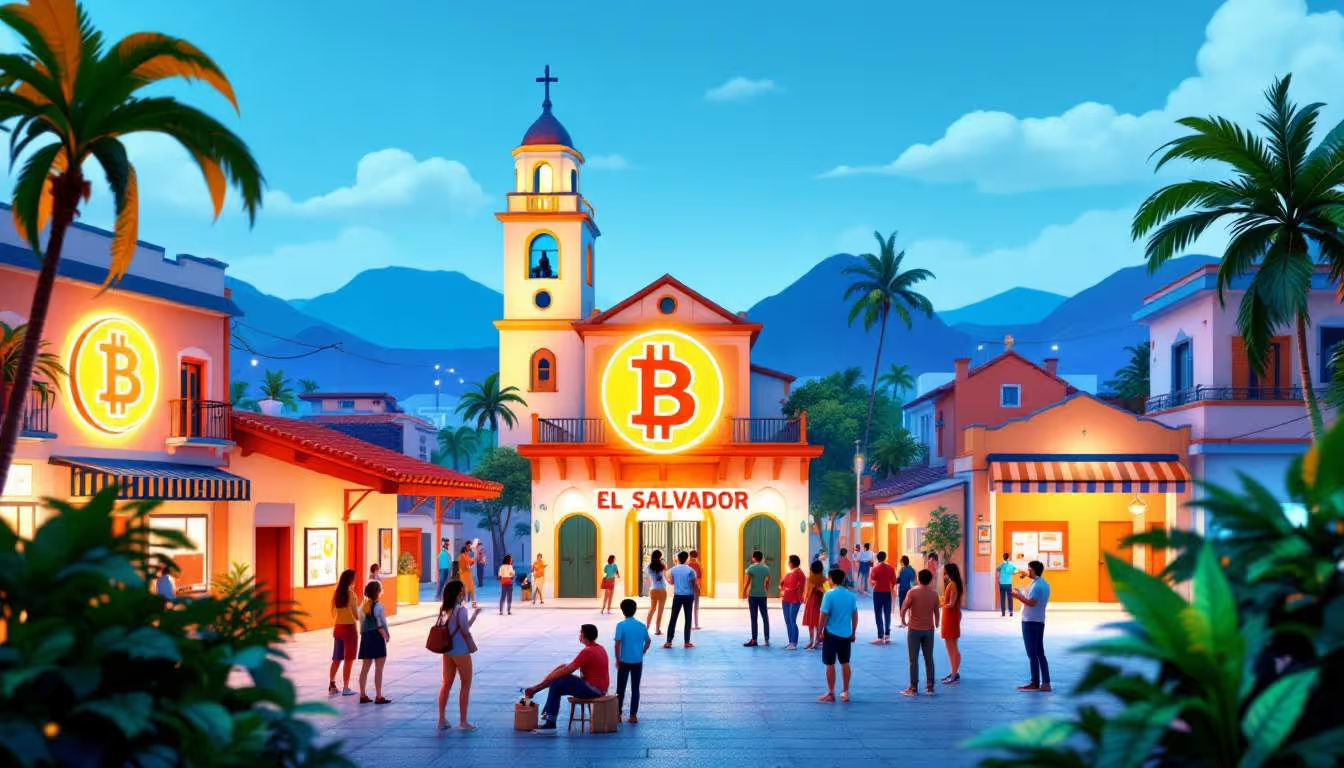
El Salvador's choice to make Bitcoin legal tender has raised questions, especially about potential risks. The International Monetary Fund (IMF) has voiced concerns regarding financial stability, citing that Bitcoin's inherent volatility could pose a threat to the country's economic health. The IMF's stability-first approach emphasizes macroeconomic stability over speculative opportunities, urging El Salvador to implement changes that could limit the public sector's involvement with cryptocurrency.
The risks involve economic instability, as Bitcoin's price variations can influence national reserves and public trust. The IMF also stressed the significance of transparency in financial dealings involving Bitcoin, cautioning that insufficient oversight could lead to governance issues. As El Salvador's Bitcoin reserves grow—reportedly accumulating around 7,509 BTC—these risks become more evident, especially in the context of ongoing negotiations with the IMF.
How Is El Salvador's Bitcoin Strategy Changing?
Regardless of the IMF's warnings, El Salvador is still dedicated to its Bitcoin strategy. The government has kept its policy of buying one Bitcoin daily since November 2022, with the intention of strengthening its national treasury. However, this consistent approach is in tandem with ongoing talks with the IMF, aiming to strike a balance that permits crypto innovation while controlling its risks.
A critical part of these negotiations involves the possible sale of the Chivo wallet, created to facilitate Bitcoin transactions for citizens. By transferring crypto operations to the private sector, El Salvador seeks to minimize the public sector's involvement with Bitcoin's volatility while still recognizing the cryptocurrency as legal tender. The government also adjusted its Bitcoin Law, making Bitcoin optional instead of mandatory, essentially reducing its legal tender status.
What Role Does the IMF Have in This Dynamic?
The IMF plays a pivotal role in influencing El Salvador's strategy for Bitcoin adoption. Its stability-first position has resulted in several recommendations designed to ease the risks associated with cryptocurrency. The IMF's conditions for financial aid include fiscal consolidation and pulling back government involvement in Bitcoin-related initiatives such as the Chivo wallet.
The ongoing discussions between El Salvador and the IMF are not just negotiations; they could be a potential framework for other nations considering similar actions. As the first nation to adopt Bitcoin as legal tender, El Salvador's journey might shape global regulatory views on cryptocurrency adoption. The IMF's engagement highlights the significance of striking a balance between innovation and financial regulation, offering a model that other emerging markets could follow.
What Lessons Can Other Countries Take from El Salvador's Experience?
El Salvador's Bitcoin strategy serves as both a warning and a potential blueprint for other emerging economies. The obstacles faced by El Salvador emphasize the need for regulatory involvement and well-defined policies that promote innovation while maintaining economic stability. Observing El Salvador's experience may help other countries recognize the dangers of rapid, state-sponsored cryptocurrency adoption lacking widespread public endorsement.
Additionally, the IMF's attention to El Salvador's Bitcoin policies underscores the necessity for transparency and accountability in financial activities. Other nations may consider taking a more cautious approach to cryptocurrency, focusing on regulatory frameworks that advance financial inclusion without jeopardizing economic stability.
What Does the Future Hold for Bitcoin in El Salvador?
The future of Bitcoin in El Salvador depends on the results of the ongoing discussions with the IMF. Successfully addressing the risks linked to Bitcoin could solidify El Salvador's role as an innovative financial hub, drawing international investment and encouraging growth. However, failing to tackle these risks could result in significant economic challenges and erode public trust in the government's financial management.
As the world closely observes, the outcomes of these negotiations will likely influence the future of cryptocurrency regulation and sovereign adoption on a global scale. El Salvador's experience may pave the way for other nations to explore digital financial advancements while addressing the intricacies of incorporating decentralized assets into their economies.