Elon Musk's recent moves raise eyebrows, but also offers glimpses into Tesla's future, especially with this $29 billion stock grant. With this essentially back-to-back, it seems like Musk wants to stay glued to the helm, especially with Tesla's car sales struggling in China and other regions and the company's pivot towards AI and robotics.
A New Strategy
Tesla's new stock compensation package comes after a court ruling that invalidated Musk's previous one due to its unfair nature for shareholders. The compensation for 2025 has raised questions about shareholder trust and corporate governance. In a world where the Tesla of 2023 does not even try to recapture its old sales numbers, it seems Musk is intent on remaining firmly at the helm, at least until the end of the decade.
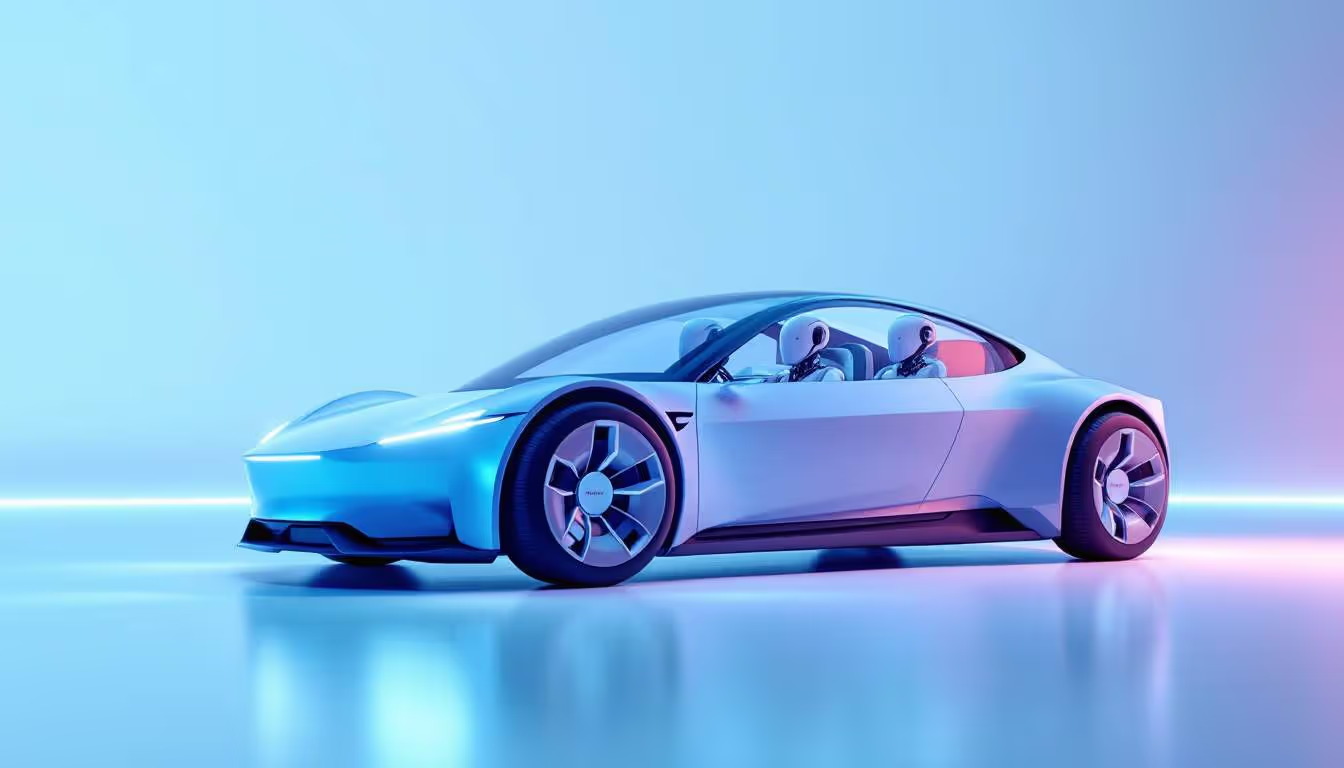
In the face of declining car sales, Tesla is strengthening its commitment to robotics and AI. The company is aiming to build an AI-based robotaxi service and humanoid robots, which could potentially generate massive revenue streams. However, the success of these initiatives will depend on overcoming regulatory hurdles and other technical challenges that may arise.
Challenges Ahead
Even with its ambitious shift toward AI and robotics in mind, Tesla must also navigate a complex landscape of present challenges. For example, the company recently saw a decline of 8.4% in sales in China from a year prior, largely due to increased competition from local manufacturers, as well as a year-to-date stock decline of over 22%.
In addition, Musk's political activities have alienated some consumers in Europe and the United States, raising concerns about the impact on Tesla's brand perception and customer base. As the EV market grows increasingly competitive, balancing Musk's personal brand with Tesla's corporate identity could prove difficult.
The Road Ahead
Despite the challenges, Tesla's strategic pivot to AI and robotics offers a promising path for the future. Innovations such as robotaxis and humanoid robots are leading this transformation, with the potential to generate significant revenue streams. The robotaxi service was projected to become a major revenue driver, possibly reaching $75 billion by 2030.
However, this will also lead to further challenges, especially with respect to regulation. But if nothing else, it seems that Musk hopes Tesla's future might include AI-supported robots in the driver's seat, paving the way for sustained growth in an increasingly competitive landscape.