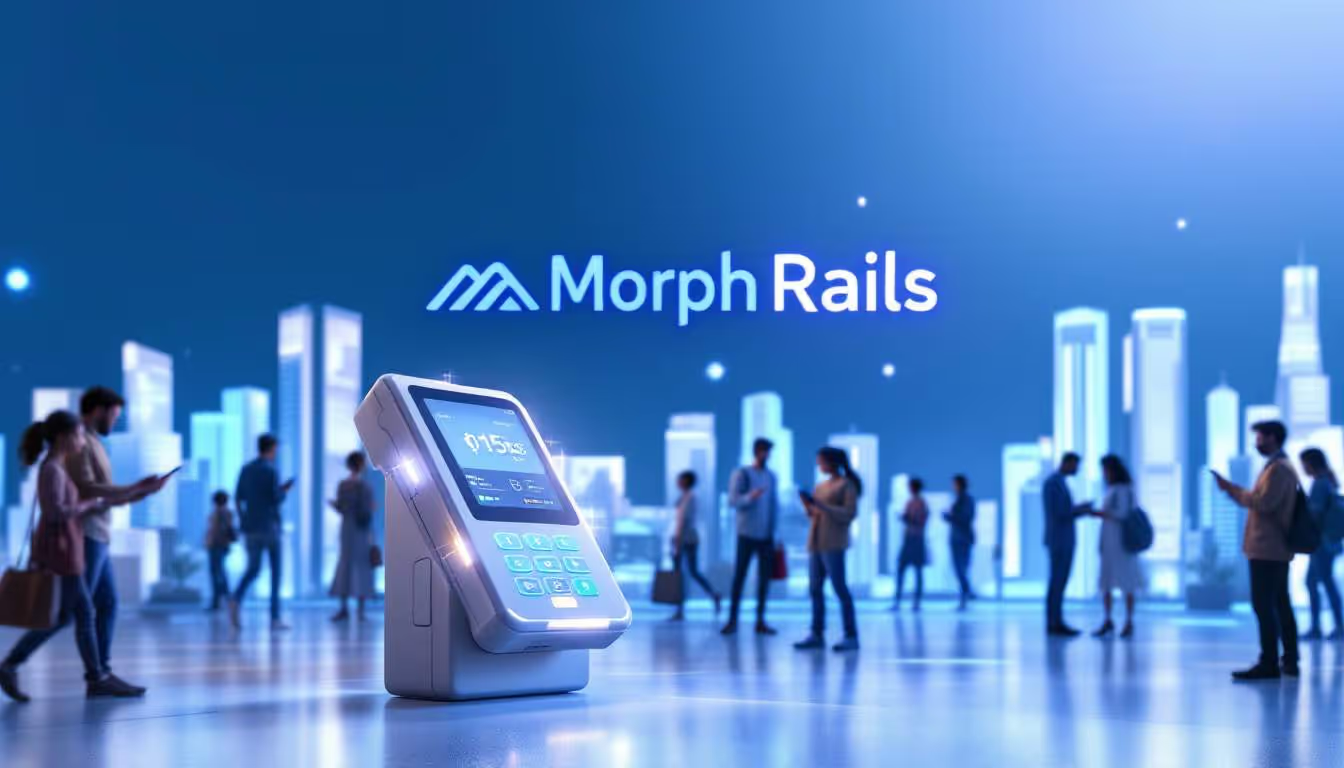
Morph Rails is shaking up the world of fintech payments. This modular, community-driven layer-2 platform is designed to power real-world payments and make financial services accessible to everyone, especially those who have been left out of traditional banking systems.
A New Era of Digital Banking for Web3
Recently, Morph introduced its Product Roadmap, unveiling a new brand identity and ambitious plans for growth through 2026. The centerpiece of this roadmap is Morph Rails, intended to serve as a programmable infrastructure layer tailored for developers and merchants. This is more than just a project; it's a vision for Onchain Consumer Finance, integrating financial tools directly into the digital lives of users.
Flexibility Meets Scalability: The Power of Decentralized Payroll Tools
Morph Rails aims to replace traditional payment processors like Stripe with a decentralized solution. Its modular approach allows developers to create custom financial applications covering a range of functions: payments, FX, payroll, invoicing, and compliance. Each module is self-custodial, composable, and scalable, equipped with features like gas sponsorship and smart wallet integration. This means financial products can be built to meet the dynamic needs of the market, without losing security or reliability.
A Global Payments Platform Built for the Future
What does this mean for the future of payments? Morph Rails offers real-time, low-cost digital payments that fit seamlessly into mobile wallets and QR code payments. This infrastructure supports everything from retail to business transactions, paving the way for fintech startups and banks to create faster, more reliable payment products. The competitive landscape is about to get interesting, as Morph Rails promises to enhance user experiences with features like payment reminders and customizable options.
Crypto Payroll for Startups and Freelancers: Financial Inclusion on the Rise
One of the most promising aspects of Morph Rails is its potential to promote financial inclusion. By offering crypto payroll solutions, it allows unbanked workers to receive their wages directly in stablecoins or cryptocurrencies. This empowers individuals to manage and spend their earnings without needing a bank account, providing access to a digital economy that was previously beyond their reach. Efficient cross-border payments also open doors for gig and remote workers, further supporting financial inclusion.
Regulatory Challenges: Navigating the Landscape of Blockchain vs SWIFT
However, Morph Rails is not without its challenges. The regulatory environment, particularly in Europe, is complex. Existing laws primarily focus on intermediaries and central authorities, making it difficult to apply regulations to decentralized platforms. Compliance with the EU's MiCA and other regulations will require careful navigation through a patchwork of national laws and data protection rules.
Summary: A Bright Future Ahead for Crypto Payments and Financial Services
In essence, Morph Rails represents a significant shift in our approach to financial services in the digital era. Its combination of modular design, decentralized infrastructure, and commitment to financial inclusion positions it well for growth in the competitive fintech landscape. As it continues to innovate, Morph Rails is set to redefine how we think about payments, making financial services accessible and easy to use for everyone.