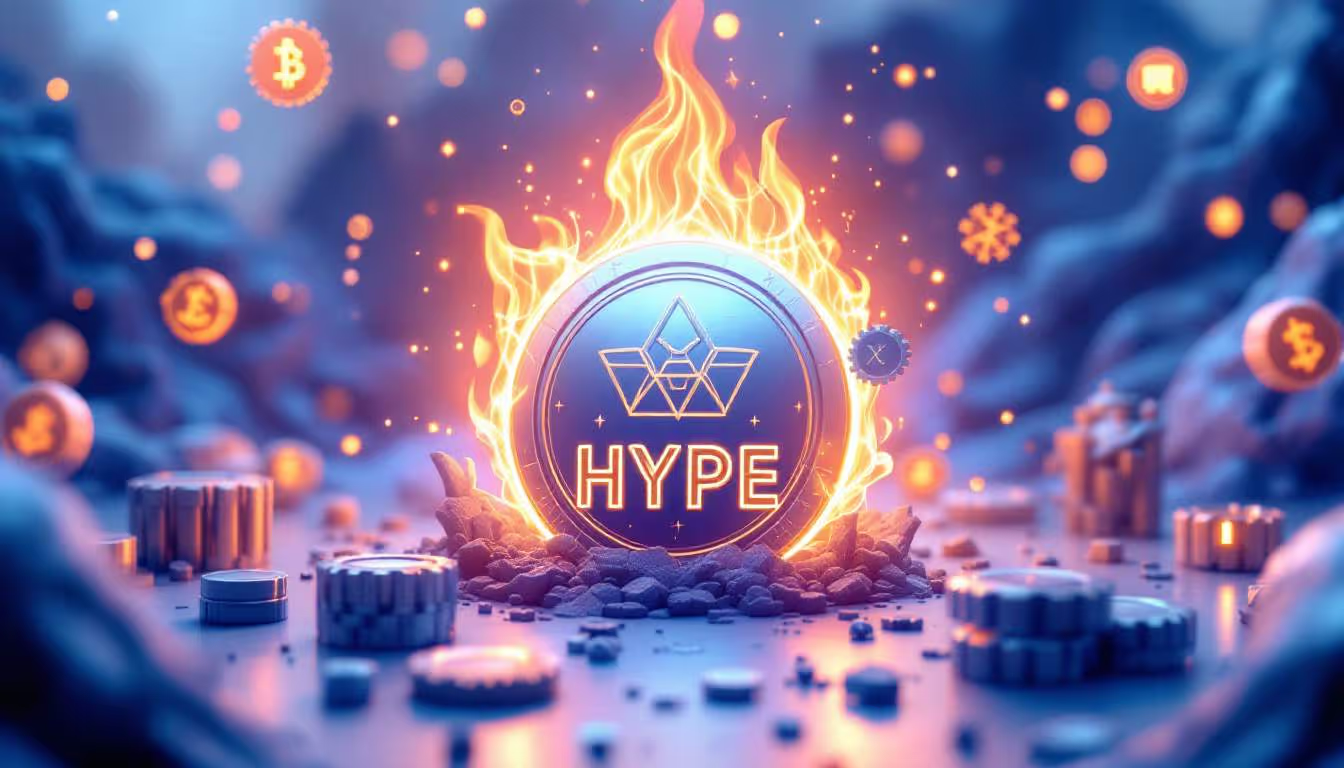
Token burning is a term you might have heard thrown around in the crypto world. So, what does it mean? At its core, token burning is the process of permanently removing a certain amount of cryptocurrency tokens from circulation. The way it works is pretty straightforward: you send tokens to a “burn address,” a wallet that’s essentially a cosmic void, never to be accessed again. The idea is that by reducing the total supply, the remaining tokens could increase in value because of scarcity. This isn’t just some random gimmick; it is often used by projects to combat inflation and provide reassurance to investors.
How Does Token Burning Affect Community Funding?
Now, about community funding — how does token burning play into it? Well, it’s a bit of a double-edged sword. On one hand, burning tokens creates scarcity, which can sound good. But on the other, it can create long-term trade-offs that might not look so rosy.
When tokens are burned, the treasury's flexibility evaporates. This means fewer resources for community initiatives, such as grants or developer incentives. Over time, this could be a limiting factor, especially if the project aims to grow or adapt.
Now, consider the funding aspect. If a project relies on its token supply to fund its operations and burns a chunk of it, the funding shortfalls could be real. This might force teams to look elsewhere, like transaction fees or outside investment, to keep things running.
If token burns are tied to on-chain revenue, though, this might lessen the blow to treasury resources. It might even allow the protocol to fund itself through its usage while still benefiting from a deflationary model.
But here’s the kicker: not everyone benefits equally. Token burns can disproportionately help early investors or larger holders, often referred to as "whales." Meanwhile, smaller contributors may feel left out in the cold, especially if they are used to token-based compensation.
Governance Implications: What Should We Know?
What about governance? Token burns can upend governance dynamics. The Hyperliquid Foundation’s proposal to burn HYPE tokens held in its Aid Fund is a case in point.
Burning tokens can serve as a trust signal to the community, showing commitment to long-term goals. However, if done opaquely, it can have the opposite effect and lead to community backlash.
Then there’s the governance trade-off. Communities have to balance between reducing token supply and ensuring there’s enough left for public goods funding. If burns happen without community buy-in, contributors could feel alienated.
And lastly, if the future reward supply decreases, it might deter new contributors. They could be left asking: what’s in it for me?
What Are the Risks Involved?
There are some serious risks with token burning as well.
One risk is that burning can tighten liquidity, making the token more volatile. This could also limit the project’s ability to fund operational costs, like payroll.
Additionally, short-lived price effects are common. Without substantial growth, the price spikes from burns tend to fizzle out. Relying solely on burns can starve development and community initiatives of funds.
If burns come off as cash grabs, they might lead to community attrition.
How Can Projects Strike a Balance?
Projects must be careful to balance scarcity and utility.
Revenue-backed burns are one way to go. If burns come from protocol fees, they are tied to network activity, allowing for deflation while still funding operations.
Dual-token models can also help. This separates the governance and funding from the market value.
Governance over burns could be granted to the community. This would preserve legitimacy and enhance incentives to contribute.
Setting time-locked or conditional burns with a minimum treasury floor can help prevent halting development and ensuring community needs are met.
What Are the Market Perceptions?
Finally, market perception can make or break the efficacy of token burns.
In some cases, the perceived value from scarcity may outweigh the funding risk. Of course, this depends on real utility and transparency.
In communities prioritizing social access and participation, scarcity-focused decisions can backfire. It might even lower willingness to pay and erode community norms.
Long-term sustainability is vital. Projects with clear utility and transparent mechanics are likely to benefit from token burns. But ignoring community needs can lead to long-term challenges.
In Summary
The Hyperliquid Foundation’s proposal to burn HYPE tokens is a crucial moment for decentralized ecosystems. As the community ponders the trade-offs of token scarcity versus funding loss, the outcome will shape Hyperliquid's future. This underscores the need for transparent, community-driven governance to navigate the intricate world of tokenomics.