
Searching for credit cards with highest limits sounds simple until you realize the question is bigger. Do you need a card with a high fixed line, a charge card with flexible purchasing power, or a business platform that doesn't make you fight the limit at all? The right answer depends on whether you're funding travel, inventory, payroll, or cross-border operations, and issuers judge that need very differently.
The practical benchmark has also moved. Many consumer-finance guides still define high-limit cards around $5,000 to $10,000+, while Bankrate says cardholders with excellent credit, high income, and low utilization may see $30,000 to $50,000 lines, and some premium products can go much higher, with reported limits on Chase Sapphire Preferred reaching $100,000 and even $500,000 on some Chase Sapphire Preferred and Chase Sapphire Reserve cards according to comparison reporting Credit Karma's high-limit card guide. For businesses, issuer data is just as telling, with premium products often sitting at the top of the pile LendingTree's 2026 high-limit card study.
ClaimKit's R&D tax guide is a useful reminder that smart financing choices usually save more than they cost. The same logic applies here. If you want real purchasing power, you need to match the card structure to the way money moves through your life or company.
Table of Contents
1. American Express Centurion Card
The American Express Centurion Card sits in a category most consumers never touch, and that's exactly why it leads this list. It uses no preset spending limit, so the line isn't defined by a fixed ceiling in the way most consumer cards are, and the account's purchasing power adapts to profile and usage. American Express also provides a Check Spending Power tool, which is the practical feature that matters when you're trying to clear an unusually large charge in advance American Express.

Practical rule: A card like this is less about borrowing and more about uninterrupted purchasing capacity. If you routinely book premium travel, high-touch events, or complex lifestyle expenses, the value is in not having to stop and negotiate a limit every time the spend spikes.
Why it stands apart
Centurion is invitation-only, so there's no direct application path. That makes it a poor fit for anyone trying to shop around for the highest possible line on demand, but it's a strong fit for ultra-high spenders who want white-glove servicing, concierge help, and large practical capacity. That matters because, at this level, the friction isn't just about credit, it's about time and coordination.
The trade-off is equally clear. The benefits are built for heavy travelers and big spenders, so if your annual usage is moderate, the card can feel expensive and excessive. It's also not a tool you can optimize around with normal underwriting tactics, because the issuer decides who gets access.
For founders and executives, the card's real value is psychological and operational. It removes a ceiling from the conversation, which can be useful when travel, events, or high-ticket purchases need to move quickly. But for most buyers, it's more status symbol than daily operating tool.
2. The Business Platinum Card from American Express
The Business Platinum Card from American Express is one of the clearest examples of a premium business charge card built for serious spend. It has no preset spending limit, and American Express gives cardholders a Check Spending Power function for larger transactions, which is exactly what finance teams need when vendor invoices or travel costs jump unexpectedly American Express business Platinum.

Best use cases
This card works well for companies that make large, time-sensitive purchases and want premium travel protections alongside the ability to carry selected eligible charges through Pay Over Time. It also fits businesses with employees who need controlled card access, since American Express supports corporate-style oversight on business accounts. That combination makes it more practical than a prestige-only product.
The downside is straightforward. The annual fee is only worth it if the card's premium travel and business benefits line up with actual spend patterns. No preset spending limit also doesn't mean unlimited purchasing, because the issuer can adjust capacity based on payment behavior and account history.
For high-volume businesses, though, that adaptive headroom is useful. It gives a company room to maneuver when a project lands late, a trip gets booked fast, or a vendor expects immediate payment. In real advisory work, that's often more valuable than a hard number printed on a card.
A good fit here is a company that already spends heavily on travel and wants to keep the card relationship inside a premium ecosystem. A poor fit is a business that mostly wants simple cashback and doesn't need the travel stack. In that case, the fee just becomes overhead.
3. Chase Sapphire Reserve
The Chase Sapphire Reserve is one of the strongest consumer options for people who want a published floor, not just a premium promise. Chase states a $10,000 minimum credit line on the product, which makes it especially interesting for founders, executives, and high-income consumers who want a large personal line with wide acceptance Chase Sapphire Reserve.

The key advantage here is clarity. Many cards imply flexibility, but Chase publishes a minimum, which gives applicants a more concrete expectation going in. That matters if you're managing large travel spend or want to keep personal utilization under control without constantly bumping into a low starting line.
If your business use case needs more than a personal card can safely support, OneSafe's cards for businesses are worth considering because spend controls and limit changes can be handled through role-based permissions and approval controls rather than one person's personal credit file. That's a very different operating model, and for teams it usually fits better than mixing personal liability with company spend.
Where it works and where it doesn't
Chase Sapphire Reserve is still a personal card, so it's not a corporate facility. That means founders using it for business should be careful about how they separate reimbursement, tax handling, and ownership of expenses. For travel-heavy individuals, though, the combination of a clearly stated minimum and premium protections makes it one of the most straightforward high-limit consumer cards on the market.
It's also a good fit for people who value strong acceptance and travel protections more than fancy payout structures. If the goal is reliable purchasing power for flights, hotels, and large personal expenses, it's a serious contender. If the goal is operational control for a company, it's the wrong lane.
4. Capital One Venture X
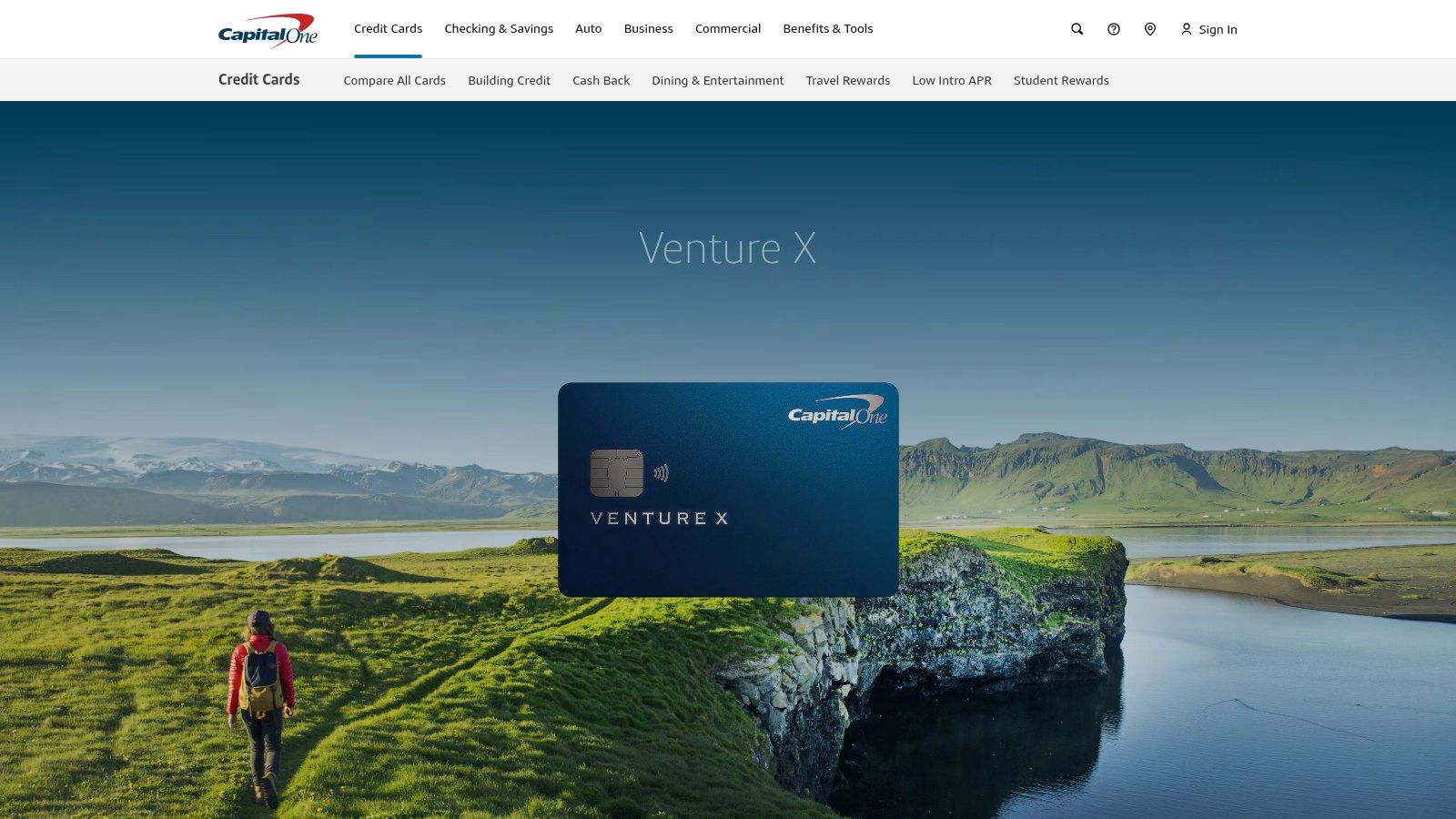
Capital One Venture X sits in the sweet spot for affluent consumers who want a premium travel card without jumping into ultra-exclusive territory. Capital One does not publish a fixed minimum line for this product, but the card sits on the Visa Infinite platform, which is commonly associated with higher-end consumer credit access and strong travel benefits Capital One Venture X.
Who gets value from it
This is a good fit for executives and founders who want large personal purchasing flexibility plus travel perks. The card's practical appeal is that it tends to live in the same conversation as other premium travel products, even though the actual limit varies by applicant profile.
The limitation is obvious. Capital One doesn't promise a floor, so if your priority is certainty, Chase Sapphire Reserve is easier to benchmark. Venture X is more about getting an attractive premium package and letting underwriting decide the ceiling.
That makes it useful for people with strong profiles who want one card to cover a broad range of travel and personal purchases. It's less useful for buyers who need a predictable limit for a specific upcoming expense. In that case, a published minimum or a business charge card may be the better tool.
For the right user, the appeal is balance. The card gives premium travel positioning without requiring the kind of exclusivity that comes with a Centurion-style product. If you want a high-end personal card that can still work as a day-to-day travel companion, this is one of the better options.
5. Capital One Spark Cash Plus
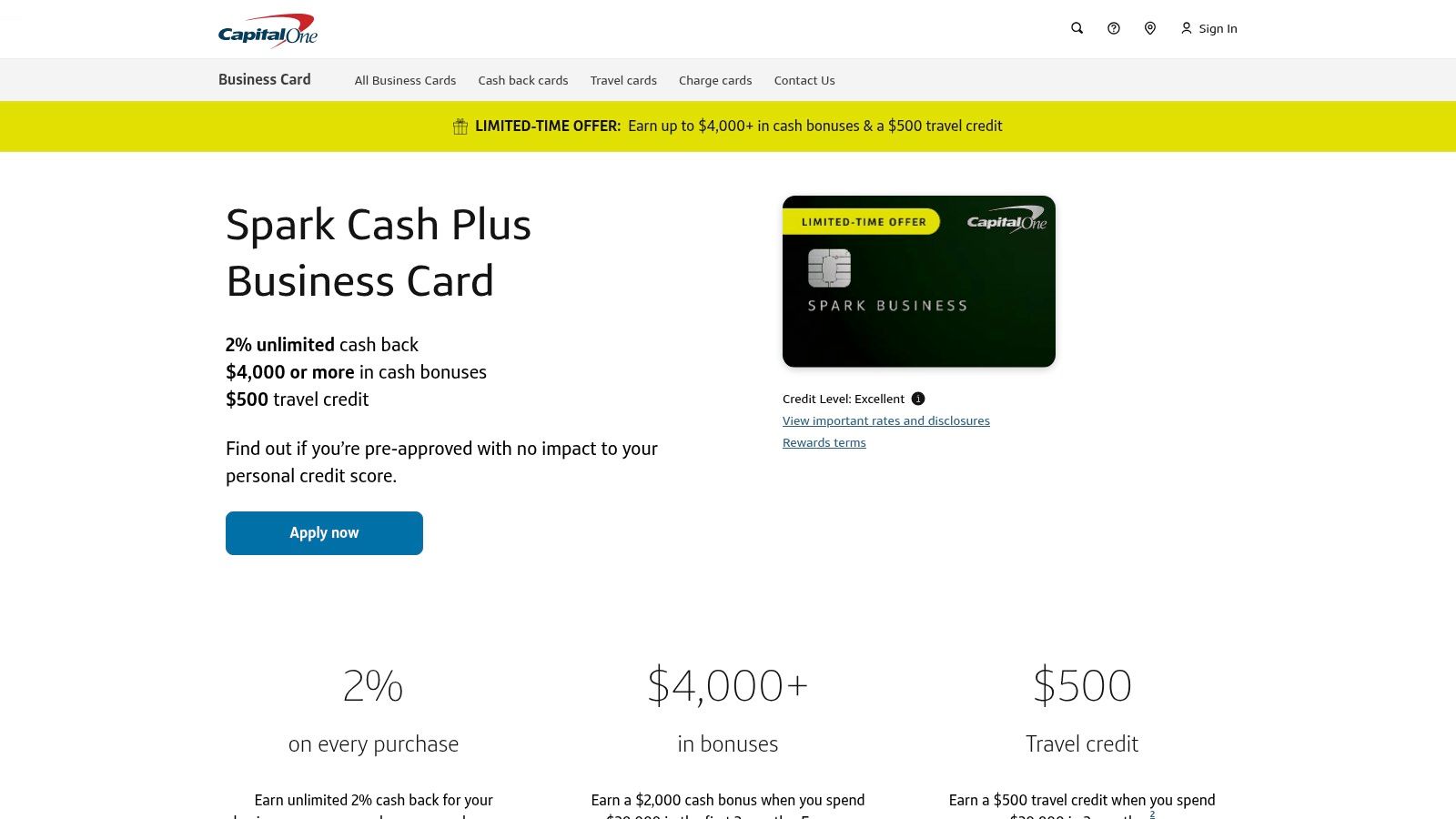
Capital One Spark Cash Plus is a business charge card built for companies that want straightforward rewards and real spending headroom. It uses a no preset spending limit structure, so the available purchasing power can expand with business performance rather than sitting inside a rigid fixed line Capital One Spark Cash Plus.
The practical fit
The flat 2% cash back structure is the appeal. It's simple, predictable, and easy for finance teams to model against spend, especially when the business is making large vendor payments, inventory buys, or recurring operational purchases. The card also has broad merchant acceptance because it behaves like a mainstream business payment tool, not a niche product.
The catch is that this is a pay-in-full product. If your cash flow is lumpy or you're trying to carry balances for working capital, a charge card is the wrong instrument. The limit may be high, but the repayment cadence is still strict.
That's why it works best for businesses that already have good cash discipline and want headroom, not debt. It can be especially helpful when purchasing needs are large but predictable, because the rewards stay easy to calculate and the spending model stays clean.
For operators, the biggest advantage is that it reduces mental overhead. There's no category juggling, and there's no need to chase bonus thresholds. That simplicity is underrated when the finance team is already dealing with high transaction volume.
6. Brex Corporate Card
Brex takes a very different approach from traditional consumer or small-business cards. It underwrites the company on business financials, such as cash balance and revenue, rather than relying on the founder's personal credit, which is why it can produce materially higher corporate limits for companies that are well funded or growing quickly Brex.
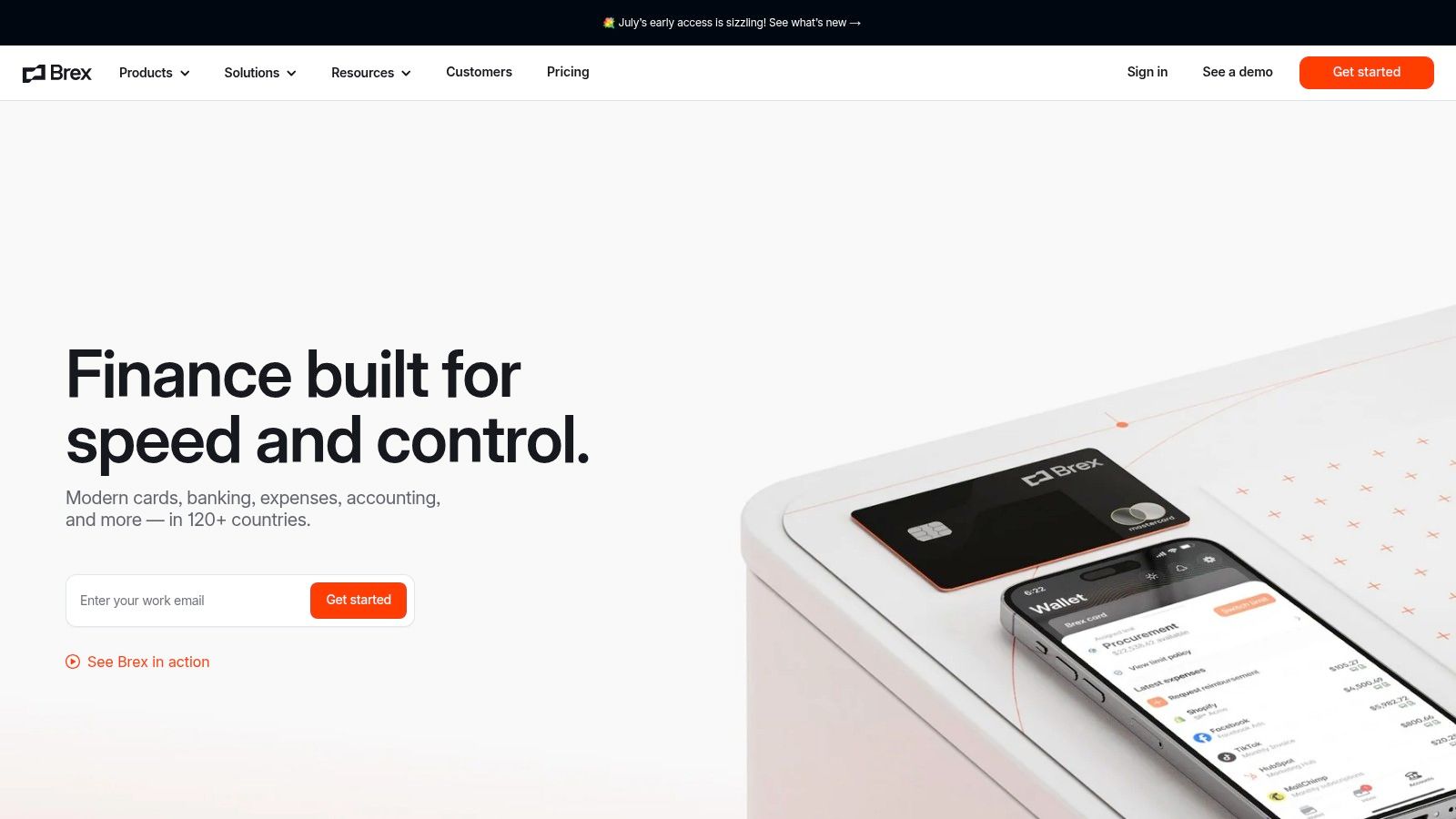
A corporate card is only useful if the company can actually manage it. Brex is strongest when finance wants separation from personal credit, policy controls, and a limit structure that reflects current operating strength instead of one founder's score.
Why teams choose it
Brex is a strong fit for startups and modern companies that want a card program tied to cash management rather than personal guarantees. The absence of personal liability is a major advantage for founders who don't want company spending to sit on their personal file.
It also pairs well with internal controls. If your finance team needs to issue cards across departments, set spending guardrails, and keep visibility on the back end, Brex is designed for that operating model. For many companies, that is a bigger win than a single giant line.
The limitation is eligibility. If the business is early, unfunded, or doesn't have enough financial momentum, the card may not be the right fit yet. That's the trade-off with modern fintech underwriting, because the same flexibility that rewards strong companies can exclude weaker ones.
If you're comparing options, OneSafe's alternatives to Brex can make sense for businesses that want multi-currency payments and corporate card control in one place. That's especially relevant when the issue isn't just card limit, but how money moves across borders.
7. Ramp Corporate Card
Ramp is one of the most practical high-limit tools for finance teams that care about control as much as spending power. It uses no personal guarantee underwriting and ties limits to company financials and cash flow, which means the card is built for businesses that want scalable purchasing capacity without putting founders' credit on the line Ramp.

Why Ramp stands out
Ramp's edge is not just the limit structure, it's the workflow around it. The platform is built for spend controls, policy enforcement, and card issuance at scale, including physical and virtual cards. That makes it easier for finance teams to expand purchasing access without losing oversight.
This is also where Ramp differs from traditional issuer logic. Instead of waiting on manual increase requests, the company can be evaluated in real time against cash flow and revenue patterns. For growing businesses, that can remove the old bottleneck where spending power lags behind actual operating performance.
The catch is that this is still a business underwriting product, not a blanket approval engine. If your company is early or thinly capitalized, the line may be smaller than you want at first. It's also a charge-card model, so it's not meant for revolving balances.
For teams comparing modern spend platforms, OneSafe's Ramp comparison guide is useful if you care about how payments, controls, and multi-currency operations fit together. That matters because a card alone rarely solves the whole operating problem.
Practical rule: If the business needs cards, approvals, and payment operations to work together, the best platform is usually the one that reduces manual reconciliation first and increases limit second.
Top 7 High-Limit Credit Cards Comparison
| Product | 🔄 Implementation complexity | ⚡ Resource requirements | ⭐ Expected outcomes | 💡 Ideal use cases | 📊 Key advantages |
|---|---|---|---|---|---|
| American Express Centurion Card (Personal or Business) | Very high, invitation-only onboarding, bespoke setup | Very high, substantial fees and elite spend thresholds | Exceptional, among the highest practical purchasing capacity and white‑glove service | Ultra‑high spenders and frequent luxury travelers needing concierge/elite access | Highest practical limits; Centurion concierge and elite travel/lifestyle benefits |
| The Business Platinum Card from American Express | High, business application and account qualification | High, premium annual fee; requires sustained high spend | Strong, adaptive headroom for large, time‑sensitive purchases plus travel protections | Companies making large vendor payments or heavy global travel spend | NPSL + Check Spending Power; Pay Over Time option and corporate controls |
| Chase Sapphire Reserve | Medium, standard consumer underwriting and credit review | Moderate, published product minimum ($10,000) and annual fee | Very good, clear high baseline credit line with premium travel protections | Executives/founders wanting large personal line and travel benefits | Publicly stated high minimum limit; Visa Infinite travel perks and wide acceptance |
| Capital One Venture X | Medium, consumer application; limits vary by profile | Moderate, competitive annual fee; limits depend on credit profile | Very good, Visa Infinite tier often yields higher starting limits | Executives seeking high personal limits combined with travel credits | Strong travel credits, lounge access, historically higher approved limits for qualified applicants |
| Capital One Spark Cash Plus (Business) | High, business charge card (NPSL) with business underwriting | High, pay‑in‑full requirement and annual fee; underwriting varies | Strong, potential for materially higher headroom vs fixed‑line cards | Businesses with large vendor/inventory payments needing predictable rewards | NPSL charge model for high capacity; flat 2% cash back and business controls |
| Brex Corporate Card | Medium, business underwriting on cash/revenue (no personal guarantee) | Varies, requires strong company financials or funding | Very strong, limits can scale with cash/revenue and separate from personal credit | Well‑funded startups and fast‑growing companies seeking high corporate limits | High limits tied to business finances; integrated spend management and no personal guarantee |
| Ramp Corporate Card | Medium, business underwriting plus finance integrations | Moderate, $0 annual fee but requires verifiable business financials | Very strong, scalable limits with deep automation and controls | Finance teams needing policy enforcement, expense automation, and high limits | No personal guarantee; robust controls, expense automation, and $0 annual fee |
Beyond Cards A Smarter Approach for Global Businesses
A high-limit card is useful when the main problem is purchasing power. It's less useful when the actual problem is operational complexity. If your business runs across currencies, pays global vendors, or works in web3, the question isn't just how much you can spend, it's how cleanly you can move money.
That's where a platform like OneSafe fits naturally. It offers multi-currency business accounts, global payments, and corporate cards with spend limits and controls, which gives finance teams a way to manage spend without stitching together separate tools for banking, payments, and card oversight. OneSafe also supports crypto-compatible workflows, which can matter when treasury, invoicing, and settlement need to bridge fiat and digital assets.
The biggest difference is structural. A high-limit card gives you more room to buy. A broader financial platform gives you a way to run the business with fewer conversion steps, fewer payment bottlenecks, and clearer control over team spend. For companies that operate internationally, that matters more than a headline credit line.
If you're choosing between a premium card and a business finance stack, start with the bottleneck. If your team is blocked by approval, spend control, or cross-border payments, the card is only part of the fix. If you want a setup that combines payment flexibility with corporate card oversight, visit OneSafe and see how it supports global business operations in one place.