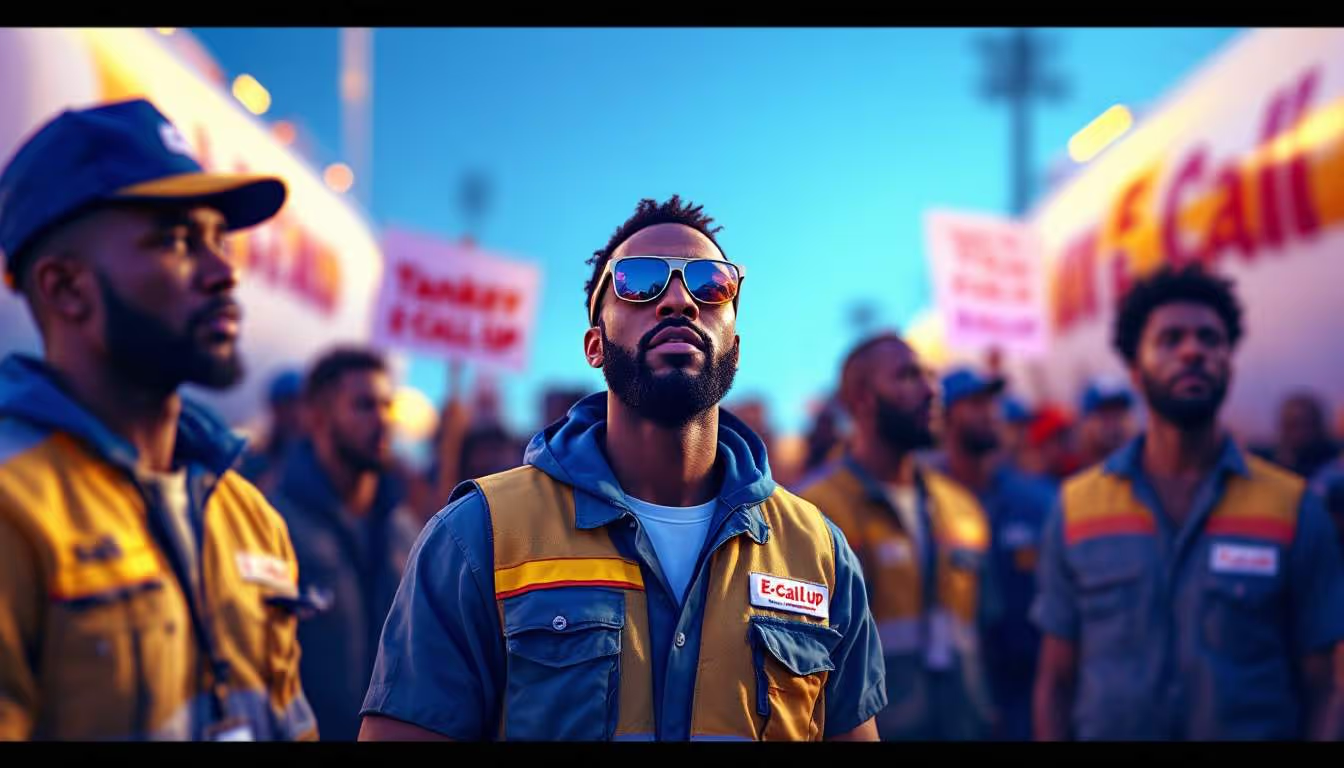
I can't help but think about the E-Call Up system being rolled out in Lagos right now. The government seems to have this vision of faster payments and efficiency, but the tanker drivers? Well, they're not too happy about it. Sure, the government wants to streamline traffic and make things safer, but at what cost to these small operators who are trying to make a living?
The E-Call Up System Explained
So the E-Call Up system is supposed to regulate how articulated vehicles and tankers access the Lekki-Epe corridor. The idea is to alleviate traffic congestion and prevent the gridlock that we all remember from the Apapa area. But, boy, the implementation has stirred up a hornet's nest, especially when it comes to fees.
Rising Costs and Small Operators
First off, the Lagos State Government is bringing back the E-Call Up system because traffic pressure has been building up. Apparently, too many articulated trucks are clogging the Lekki-Epe corridor. They want to manage the flow of vehicles to keep emergency services moving and to cut down on pollution from idling trucks. But then they drop this bombshell: a N12,500 fee per truck. That's a hefty amount, especially for small operators who are already on the brink.
Tanker drivers, represented by the National Association of Road Transport Owners (NARTO), are saying they can't swing the N12,500 levy. They're looking for something like N2,500 per truck. NARTO President Yusuf Othman is adamant that the fee is too steep, and if the government doesn't budge, they might just stop loading petroleum products altogether. You can imagine how that could send ripples through the market and raise prices for consumers.
Government Justification
Now, the government is justifying this N12,500 fee as a way to recoup costs associated with the infrastructure built for the E-Call Up system. According to the Permanent Secretary of the Lagos State Ministry of Transportation, this is not a money-making venture for the government but a way to maintain the facilities that help keep traffic flowing and the air cleaner. But I can't help but wonder if they’re just collecting payments without being held accountable for how the money is used.
Ethical Considerations
As I digest this, I find myself questioning the ethics behind using public infrastructure and regulatory systems for revenue generation. Transparency is key here. People should know how fees are set and where the money goes. The last thing we need is for low-income operators to be hit the hardest. The government should really think about creating pricing structures that don’t crush small businesses while still keeping to their regulatory goals.
Alternative Funding Models
Let's be real, though. There are other ways to fund these infrastructure improvements. Public-Private Partnerships (P3) could mean that the government and private entities share the costs, easing the load on small businesses. And Land Value Capture (LVC) could work too. This is where the increased land value from infrastructure improvements helps pay for the projects, meaning those who benefit actually chip in.
Summary
Ultimately, the E-Call Up system in Lagos is at a crossroads. The government needs to balance its demands with the realities faced by small operators. As tanker drivers make their case for fairer payment solutions, dialogue is crucial. The government should explore alternative funding models and ensure that fee structures are transparent. Only then can they create a fairer environment for everyone involved in the transport sector.