

If Payoneer is charging you 1% to receive into a currency you do not hold, then up to 4.00 USD again to withdraw it, the cost of getting paid is quietly eating a slice of every invoice. For a business running a handful of cross-border payments a month that is an annoyance. For one running hundreds, it is a line item.
This guide compares 10 alternatives to Payoneer on the things that actually change your monthly cost: what you pay to receive money, what conversion costs, which currencies you can transact in, and how each platform handles payouts to people in other countries. Some are built for freelancers collecting from marketplaces. Some are built for finance teams paying suppliers across a dozen currencies. Knowing which group you fall into narrows the list fast.
What is Payoneer?
Payoneer is a cross-border payments platform best known for letting freelancers, sellers and service businesses receive money from overseas clients and marketplaces through local receiving accounts.
Its pricing is transaction-based, with no subscription. Receiving from another Payoneer balance is free, and so is receiving into a local-currency receiving account. Receiving into a receiving account in a currency that is not your local currency costs 1%, with a minimum of 1.00 USD or equivalent. Payments funded by a payer's credit card or by PayPal in the US run up to 3.99% plus 0.49 USD, while ACH bank debit in the US and EU or UK bank transfers are 1%. Withdrawing from your Payoneer balance to a bank in the same country costs up to 4.00 USD, EUR or GBP.
That structure suits someone whose income arrives through marketplaces. It suits a company paying 40 suppliers across six currencies rather less, which is where most people start looking for payoneer competitors.
What to Consider When Selecting a Payoneer Alternative?
The right platform depends on how money actually enters and leaves your business. Five things separate the options:
- What it costs to get paid. Most comparisons focus on transfer fees. If your revenue arrives from abroad, the receiving fee and the currency it lands in matter more.
- Currencies you can genuinely transact in. A long marketing list of "supported" currencies often means conversion at the edges. Check which ones you can hold a balance and settle in.
- Local rails versus international wire. SEPA, PIX and SPEI settle faster and cheaper than a SWIFT wire. A platform that routes per currency saves both time and fees.
- Payout reach. If you pay contractors or suppliers, look at how many countries the platform pays into and what compliance work it takes off your plate.
- Pricing model. Per-transaction, monthly subscription, or per-worker. The cheapest headline rate can lose to a flat monthly fee once volume rises, and the reverse is true at low volume.
If those points match how your business moves money, the list below breaks each option down on the same terms.
10 Best Alternatives to Payoneer
1. OneSafe
We built OneSafe for companies operating across borders, where money arrives in one currency, gets spent in another, and increasingly moves as stablecoin. Payoneer charges most businesses at both ends of that journey: 1% to receive into a currency you do not hold, then up to 4.00 USD again to move it to your bank. The cost is structural, because the money has to keep converting. We take the conversions out by letting you transact in the currencies themselves.
You can transact in USD, EUR, BRL, MXN, GBP, COP, USDC and USDT from a single account, with payments routed over the fastest rail available for each one: SEPA for EUR, PIX for BRL, SPEI for MXN, or stablecoin settlement in seconds. Incoming payments can auto-convert to your base currency, so revenue arriving in six currencies does not become six reconciliation problems.
Onboarding usually completes within a week while meeting full KYB standards, digital assets are held on Fireblocks, and multi-factor authentication is enabled for every user at signup.
Pricing
- Free account opening. Opening an account costs nothing, and corporate cards are included.
- Free or $29+/month. The monthly fee depends on your plan, with a minimum balance between $0 and $10,000.
- 0.15% on fiat deposits and withdrawals. Wire withdrawals are a flat $25 and wire deposits $10.
- 0.25% currency conversion. FX runs at 0.25% or the FX rate, and corporate card spending in a non-USD currency carries a 3% fee.
- Free USDC movement. Crypto deposits and withdrawals in USDC are free. SWIFT deposits and withdrawals are 0.35% plus $50.
Reviews
Customers most often mention support quality and the relief of running fiat and stablecoin operations in one place, which removes the usual work of stitching several platforms together.
- "OneSafe has the best customer support I've ever experienced from a bank." Amit Chu, Investments @ Celo Foundation
- "OneSafe is a game-changer. They solve so many headaches for our company. Finally a banking solution that gets it." Marco Mirabella, CEO of Ensuro
Want an account that transacts in the currencies you actually earn in? Check us out here.
2. Wise
Wise is a UK-founded platform offering multi-currency accounts, local account details in 22 currencies, and transfers at the mid-market exchange rate. It is the closest like-for-like swap for someone using Payoneer to get paid.
Receiving is where it separates from Payoneer. Getting account details is free, and receiving domestic payments in AUD, CAD, EUR, GBP, HUF, NZD, PHP, SGD and USD costs nothing. Holding a balance is also free.
Pricing
Registration is free and there are no subscriptions. Sending and converting start from 0.23% and vary by currency. Receiving USD wire and SWIFT payments costs 6.11 USD per payment. The multi-currency card is a one-off 9 USD, with ATM withdrawals free up to 250 USD per month and 1.95 USD plus 1.95% after that.
Reviews
User reviews consistently praise the transparent pricing and the exchange rate, while account freezes and verification holds are the most common complaints. Check out more Wise reviews here.
3. Airwallex
Airwallex is a global financial platform for businesses, covering multi-currency accounts, corporate cards, FX and payment acceptance. It leans further into treasury and spend management than Payoneer does.
Pricing
The entry plan is free at $0 per user per month. Grow moves to $12 per user per month, plus a platform fee based on team size. Accounts collect and hold in 20+ currencies with free batch transfers to 120+ countries, and the platform offers interbank FX rates plus a yield product on USD balances.
Reviews
User feedback tends to highlight the breadth of the product and the FX rates, with account verification and support responsiveness the recurring friction points. Check out more Airwallex reviews here.
4. Revolut Business
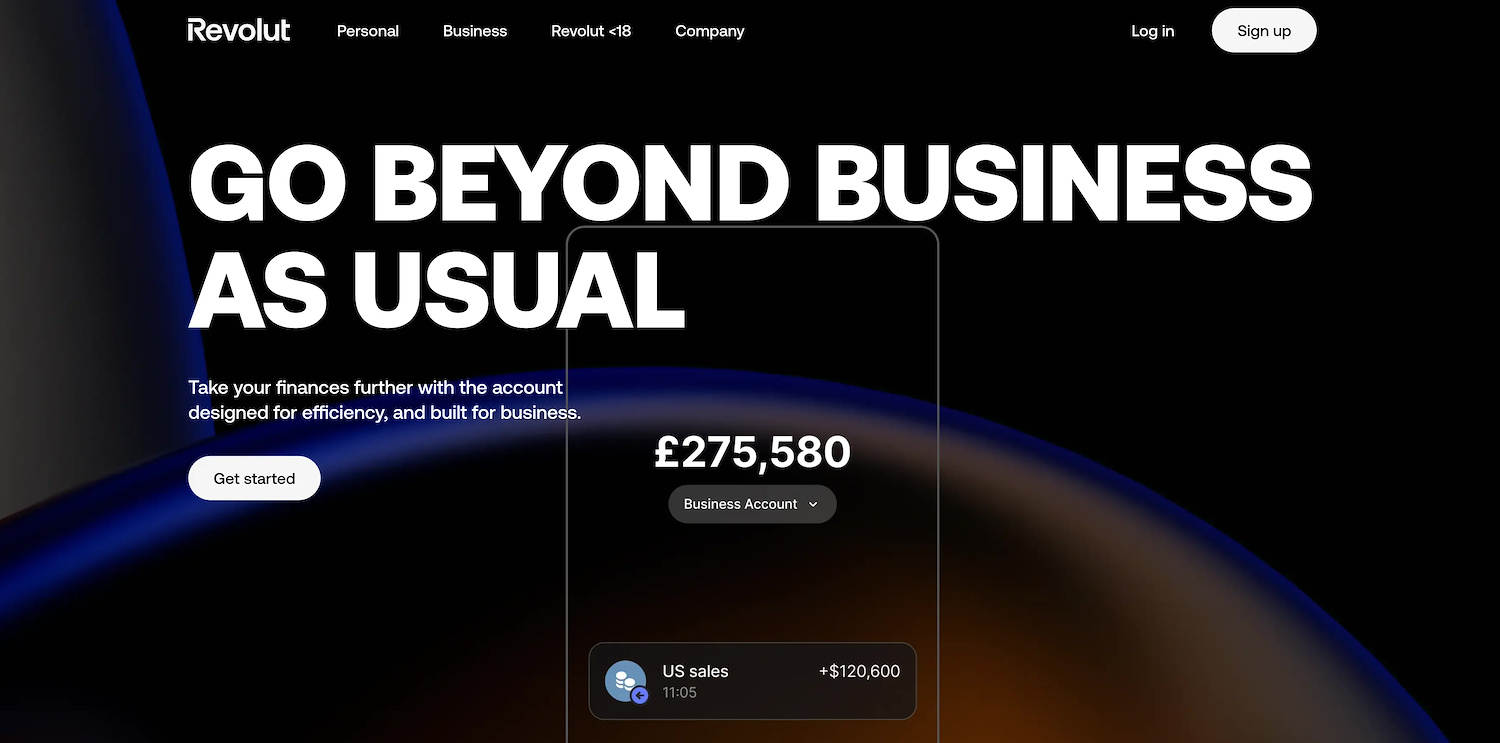
Revolut Business packages multi-currency accounts, cards, expense tools and payment acceptance into subscription tiers, which makes it predictable to budget for and less attractive at very low volume.
Pricing
Plans start from £10 per month for Basic, £30 for Grow and £90 for Scale, with discounts on annual billing. Each plan includes a monthly interbank-rate exchange allowance, after which conversion costs 0.6%. ATM withdrawals carry a 2% fee, and payment acceptance starts from 0.8% plus £0.02.
Reviews
User reviews rate the interface and speed highly, with complaints clustering around account freezes and the difficulty of reaching support on lower tiers. Check out more Revolut Business reviews here.
5. Deel
Deel is a global hiring and payroll platform, so it sits slightly outside the payments-account category. It earns a place here because a large share of Payoneer usage is really about paying contractors abroad.
Pricing
Contractor management is $49 per contractor per month, with global payroll priced on request. Employer of Record starts at $599 per employee per month, US PEO at $125 per employee per month, and contractor of record at $325 per contractor per month.
Reviews
User reviews rate compliance coverage and onboarding speed, while cost at scale draws the sharpest criticism, followed by support depth. Check out more Deel reviews here.
6. Tipalti
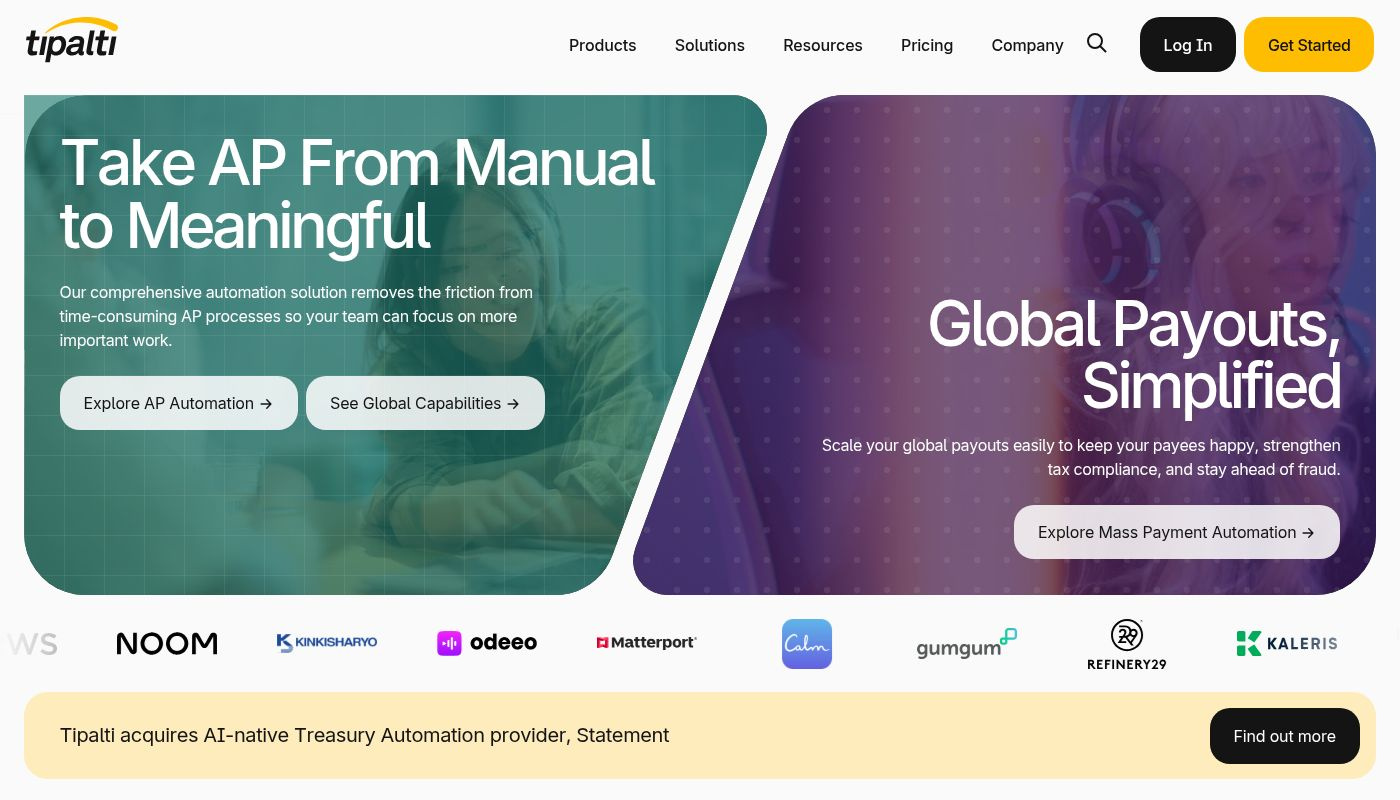
Tipalti automates accounts payable and mass payouts for finance teams, covering supplier onboarding, tax form collection and reconciliation. Companies usually move to it once payment volume is high enough to justify dedicated AP software.
Pricing
Plans start at $99 per month, with a higher tier from $249 per month and enterprise pricing by quote.
Reviews
User feedback from finance teams cites the reduction in manual AP work as the main benefit, with implementation time and per-module pricing the usual objections. Check out more Tipalti reviews here.
7. PayPal
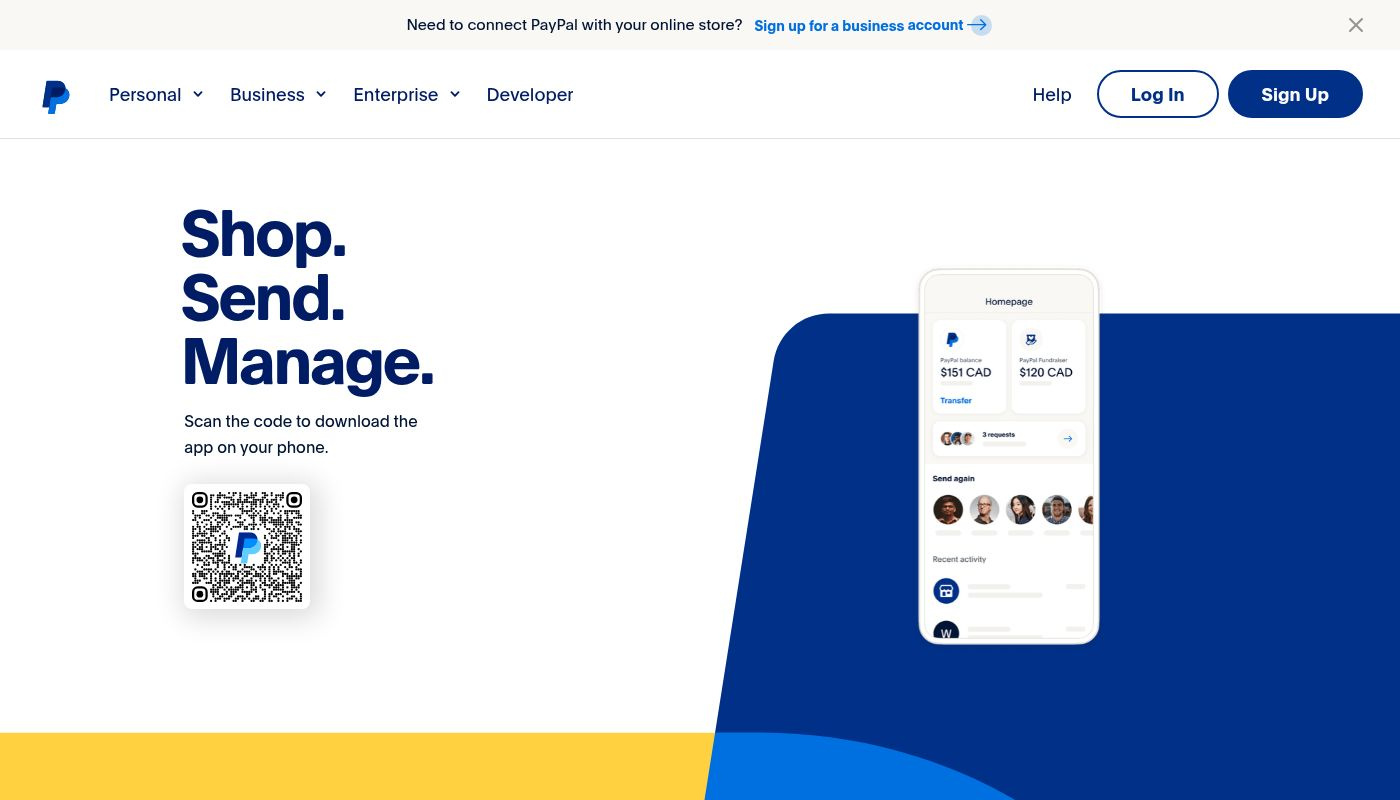
PayPal remains the default for businesses whose customers expect a familiar checkout, and it overlaps with Payoneer on receiving international payments.
Pricing
Commercial transaction rates vary by product, with send and receive for goods and services at 2.99% and QR code transactions through a third-party integrator at 2.29% plus 0.09 USD. Fixed fees are charged per currency, at 0.49 USD, 0.39 EUR or 0.39 GBP.
Reviews
User reviews point to reach and buyer familiarity as the strengths, while holds on funds and dispute handling are the most common complaints from businesses. Check out more PayPal reviews here.
8. Mercury
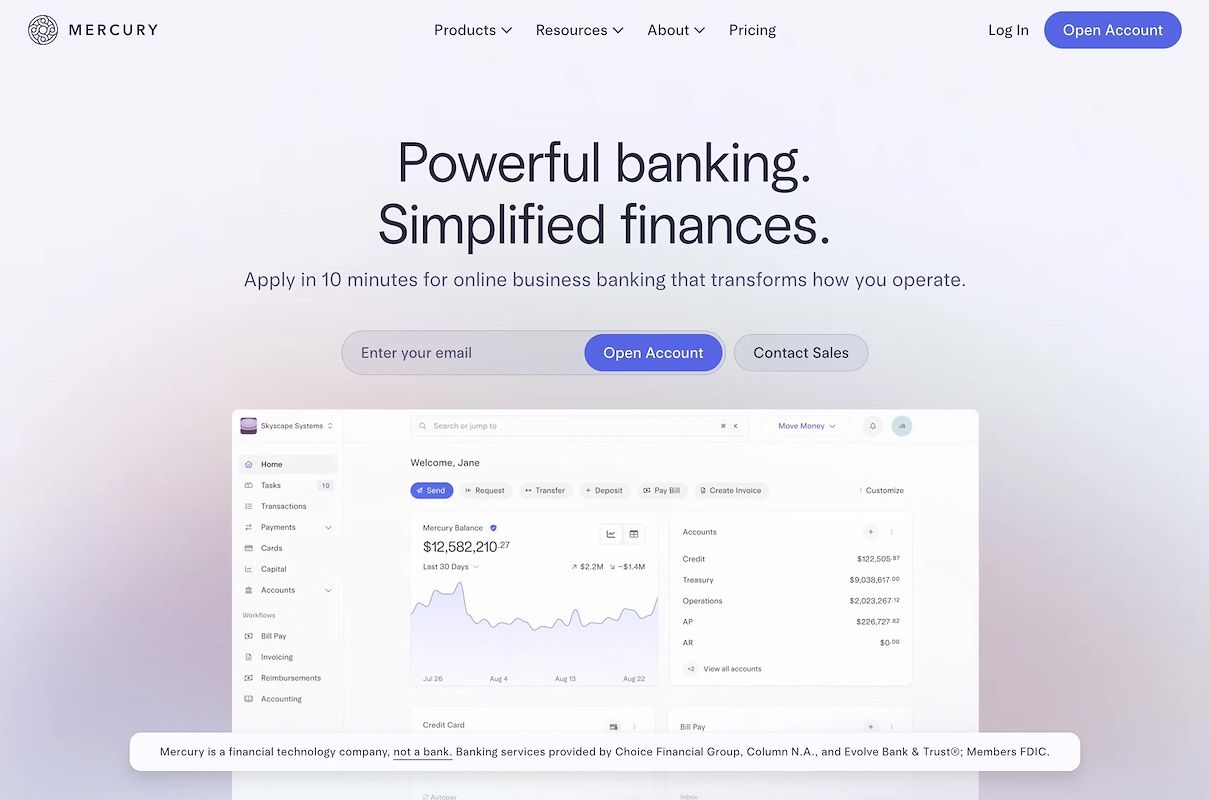
Mercury offers business accounts and financial tooling aimed at startups, with a strong US focus. It is a fit if your operations are US-centred and you want spend and invoicing in the same place.
Pricing
The base account costs nothing. Paid plans start at $35 per month, or $29.90 per month on annual billing. Invoicing with ACH debit is $1 per transaction, and treasury features unlock at a $250K balance.
Reviews
User feedback gives the product design and the free base tier the strongest marks, with international coverage the limitation raised most often. Check out more Mercury reviews here.
9. Skrill
Skrill is a digital wallet used for international transfers and online payments, closer to Payoneer's consumer side than its business side.
Pricing
Sending money to other US Skrill customers is free, while sending to non-US Skrill customers carries a 2.99% international transaction fee applied to the sender. Receiving from another US Skrill customer is free. Some withdrawal methods are free and others cost 1.50% with a minimum of USD 0.50, and an inactivity service fee of USD 5.00 can be deducted monthly.
Reviews
User reviews list speed and ease of setup as the positives, while verification requirements and account limits come up repeatedly in the negatives. Check out more Skrill reviews here.
10. Hyperwallet
Hyperwallet, a PayPal service, specialises in mass payouts to workers, sellers and contractors, offering payees a choice of payout methods across many countries.
Pricing
Hyperwallet does not publish pricing publicly. Costs are quoted per implementation based on payout volume, methods and geography, so you will need to speak to their team for a figure.
Reviews
User feedback favours the payout-method choice and the payee experience, with setup burden and a long enterprise sales process the usual friction. Check out more Hyperwallet reviews here.
Which One Should You Go With?
Start from where the friction actually is. If it shows up when money arrives, compare receiving fees and the currencies each platform can land funds in without converting. If it shows up when money leaves, compare payout reach and the rails each one uses.
Payoneer is still a reasonable choice for marketplace income, and nothing here changes that. What it handles less well is a business holding balances in several currencies and paying out across borders every week, which is the gap most of these alternatives to Payoneer are built to close.
If that describes your operation, OneSafe puts eight currencies, local rails and stablecoin payouts in a single account.
Comparison based on publicly available product information as of August 2026.


