Does Web3 payment require a bank? In 2026, pure wallet-to-wallet transfers bypass banks entirely. But fiat obligations make a banking partner essential at some point.
Executive Summary
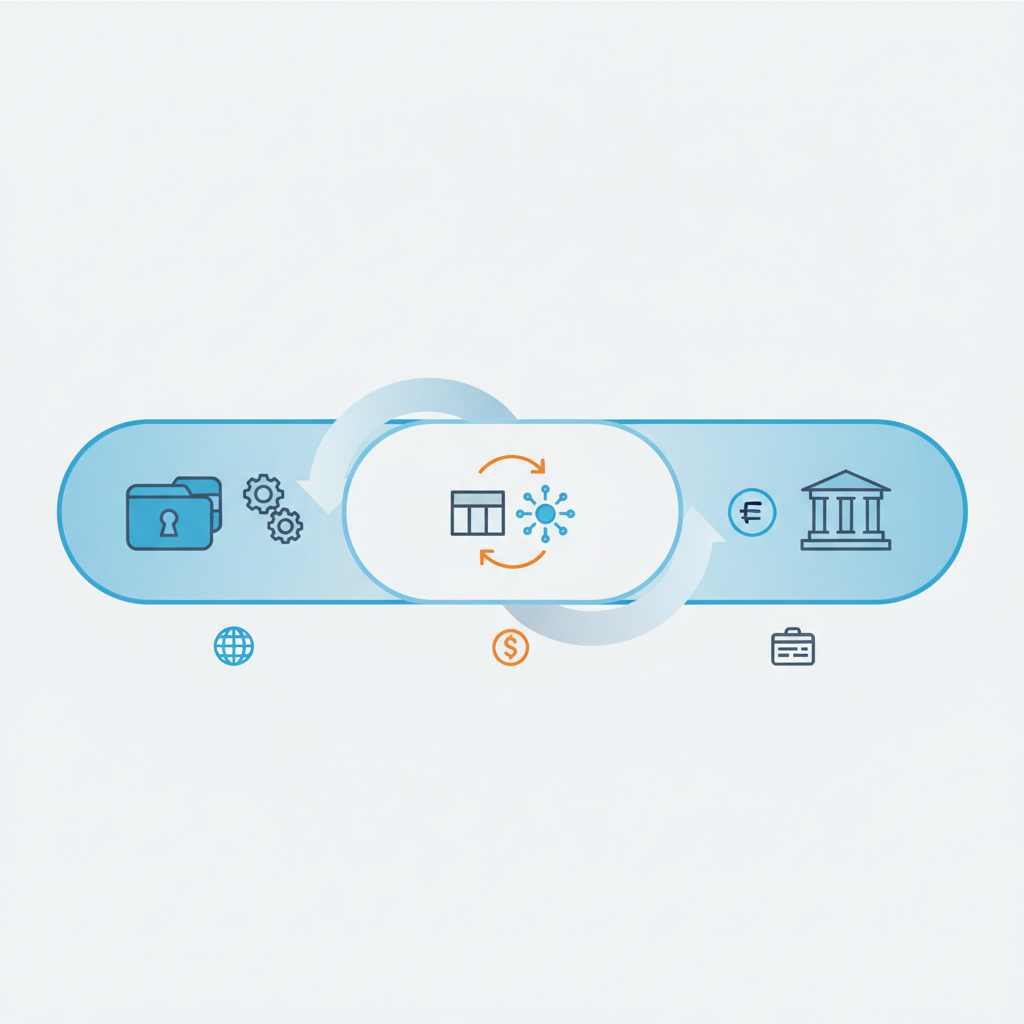
Web3 payments live on a spectrum. At one end, a DAO can pay contributors entirely in stablecoins via smart contracts, with no bank in sight—a pure web3 payment without bank. At the other, a global business must convert to fiat to satisfy local tax codes, creditor demands, and practical realities like paying a landlord. The real question isn’t “do I need a bank?” but “at what point in my payment flow does a regulated financial partner become essential?” This article maps those boundary conditions, covering non-custodial transfers, hybrid banking, compliance obligations, and the emerging tools—from PayFi to bank-issued stablecoins—that are rewriting the rules in 2026.
What Web3 Payment Actually Means
Blockchain rails vs. traditional payment networks
A Web3 payment is any transfer of value where settlement occurs on a blockchain or distributed ledger, rather than through a centralized clearing system like SWIFT or ACH. The payment itself might be denominated in a cryptocurrency (ETH, BTC) or in a stablecoin pegged to a fiat currency. The critical difference is finality: on a blockchain, settlement and payment happen simultaneously, often within seconds, without a chain of correspondent banks debiting and crediting accounts. Traditional payment networks separate message from movement of funds, introducing delay, cost, and multiple intermediaries. Web3 payments collapse that stack into a single transaction, cutting reconciliation overhead for businesses that can keep value on-chain.
Stablecoins and programmable money as the default settlement layer
Stablecoins—tokens pegged 1:1 to a fiat currency like USD or EUR—are the predominant medium for Web3 business payments because they eliminate volatility while preserving the speed and programmability of blockchain settlement. A USDC or EURe transfer moves in the same deterministic way as any on-chain asset. This makes them attractive for cross-border B2B payments, treasury management, and payroll. A Chainlink report from March 2026 describes stablecoin on-ramps and off-ramps as the critical infrastructure that connects fiat liquidity to Web3, enabling businesses to move value between the two worlds.
Are stablecoins safe to use for business payments?
Safety here is not binary. A well-collateralized, audited stablecoin issued by a regulated entity carries low de-pegging risk, but no stablecoin is free of legal and custodial exposure. For business payments, you need to evaluate: (1) the reserves backing the coin (cash equivalents vs. algorithmic mechanisms), (2) the issuer’s regulatory standing, (3) whether you hold the private keys yourself or keep funds on an exchange. For example, Circle’s USDC is backed by short-dated US Treasury securities and subject to regular attestation, while some offshore algorithmic stablecoins have failed catastrophically. The practical takeaway: stablecoins are as safe as the combination of the issuer’s reserves and your own custody model. For a business, using a tier‑1 stablecoin with private-key control is often safer than keeping excess fiat in an uninsured account in a volatile jurisdiction.
The spectrum from pure crypto to hybrid fiat-crypto flows
Web3 payments exist on a continuum:
- Pure crypto, bankless: wallet-to-wallet, no fiat touchpoint; counterparties accept and hold tokens.
- Crypto-funded, fiat-settled: a service provider converts incoming crypto to fiat before it hits the recipient; the payer spends crypto, the payee receives bank deposits.
- Hybrid fiat-crypto accounts: the business holds both fiat and crypto balances with a single provider that offers IBANs, corporate cards, and API access to automatically convert between them.
Understanding where your payment falls on this spectrum determines whether you need a bank and what kind.
When You Can Pay Without a Bank
Non-custodial wallet-to-wallet transfers for pure crypto transactions
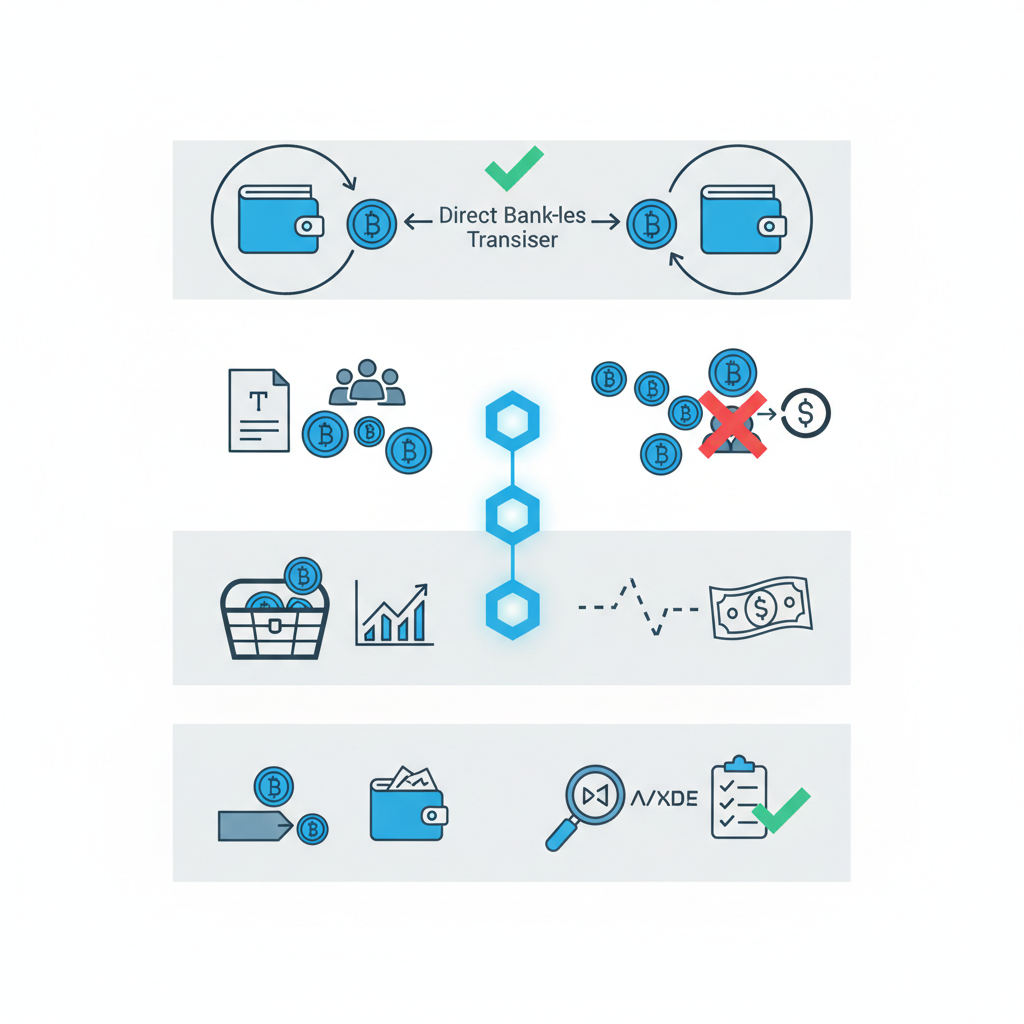
If your counterparty—a freelancer, a supplier, another DAO—is willing to be paid in stablecoins or other crypto assets and can hold them in a self-custody wallet, you can complete the entire payment on-chain without touching a bank. All you need is the recipient’s wallet address. This is routine for contributor grants in DAOs, cross-border settlements between Web3-native entities, and even some B2B deals where the counterparty already uses a crypto treasury. The transaction will be visible on-chain, so it’s not anonymous (as a common myth suggests), but it bypasses the entire banking system for settlement.
Smart contract-based payments and DeFi settlement
Payments that are triggered by conditions coded into a smart contract—such as releasing funds when a milestone is verified on-chain, or automatically distributing protocol revenue to token holders—operate without any bank. These flows use decentralized finance (DeFi) protocols for settlement, and the payment logic runs on the blockchain. However, they still rely on the underlying token having value off-chain if the recipient eventually wants to exit to fiat. So while the payment itself is bankless, the need for an off-ramp later creates a future dependency.
Paying with crypto debit cards: off-chain but still crypto-funded
Crypto debit cards—issued by companies like Coinbase, Crypto.com, or other fintechs—let you spend crypto at any merchant that accepts Visa or Mastercard. Behind the scenes, the provider converts a portion of your held crypto to fiat at the point of sale. You aren’t using a bank for the payment rail, but you are relying on a regulated partner that operates a fiat‑to‑card‑scheme bridge. This is a quasi‑bankless experience: you maintain a crypto wallet, but the provider must have banking relationships to settle in the card networks. Notably, as CoinGecko’s 2026 ranking highlights, the latest cards offer cashback in crypto and multicurrency support, but they remain custodial. The provider holds your keys, which introduces risk if the platform freezes funds or goes offline—as the community noted following the Solflare Card shutdown.
A simple decision framework: do you need a bank?
Ask these four questions. If the answer to all is “yes,” you can operate without a bank today:
- Can all payees accept and hold crypto natively? (If not, you’ll need an off-ramp.)
- Do your tax, payroll, and legal obligations allow settlement entirely in crypto? (Most jurisdictions require tax payments in fiat; employees may demand fiat wages.)
- Is your treasury able to cover short-term fiat expenses without converting large amounts on demand? (If not, you need a fiat buffer or a credit line from a bank.)
- Are you comfortable that your counterparty identification, record-keeping, and sanctions screening can be handled without the monitoring a regulated bank provides? (Non-custodial setups push compliance burden onto you.)
A “no” at any point means you need at least a hybrid banking partner for specific slices of your payment stack.
When a Bank (or Neo-Bank) Becomes Necessary
Meeting fiat obligations: payroll, taxes, and vendor invoices
Even the most crypto-native business must interact with the fiat world. Employees in jurisdictions like the US, Germany, or Singapore expect salary deposits in local currency. Tax authorities demand settlement in fiat. Landlords, utilities, and traditional suppliers send invoices in euros, dollars, or yen. A bank—traditional or neo—that provides local account details and SEPA/ACH access becomes the only practical way to discharge these obligations without manually converting crypto each time through an exchange, which adds slippage, timing risk, and compliance friction.
Accessing fiat liquidity, credit, and treasury management
Web3 businesses may hold significant treasury in stablecoins or volatile assets but need working capital in fiat. A bank can lend against those holdings (via crypto-collateralized loans or traditional credit lines) and provide treasury management services that sweep excess fiat into interest-bearing instruments. Without a banking relationship, you’re forced to liquidate assets every time a fiat bill comes due—a taxable event and a market-timing gamble. This is why even Web3-native enterprises banking strategies now routinely include a small fiat buffer with a regulated partner.
KYC, AML, and the travel rule: identifying counterparties legally
When you send a payment through a traditional bank or a regulated payment institution, the institution performs the heavyweight know‑your‑customer (KYC) and anti‑money laundering (AML) checks on your behalf. For payments above certain thresholds, the Financial Action Task Force’s (FATF) Travel Rule requires that originator and beneficiary information accompany the transaction. In a pure on-chain transfer, you may not know who controls the destination wallet. A bank—or a hybrid platform that integrates compliance—addresses these legal requirements systematically. Attempting to handle them manually with a non-custodial wallet is operationally fragile and exposes the business to sanctions violations.
What licensing should I look for in a Web3 banking partner?
The partner’s license determines what protections you have and where you can operate. Two key categories:
- EMI (Electronic Money Institution) license: common in the EU and UK for fintechs that issue e‑money and process payments, but they cannot lend and are not covered by deposit guarantee schemes. Many crypto-friendly platforms operate under an EMI license.
- Full banking license: allows the institution to take deposits, lend, and often participate in deposit insurance schemes (e.g., FDIC in the US, FSCS in the UK). A partner with a banking license typically offers higher fund protection and can provide credit products, but is rarer in the Web3 space due to stricter regulatory scrutiny.
A Web3 business that moves large volumes and wants deposit insurance should seek a partner with a full banking license wherever possible. For day‑to‑day transactional accounts, a well‑supervised EMI with segregated client funds can be sufficient, but you must verify the segregation mechanism.
Legal entity requirements and jurisdictional banking mandates
Many jurisdictions require that a registered business hold a bank account in the country of incorporation for capital deposits, reporting, or tax filings. Germany’s GmbH, for example, must show a paid‑in capital account. A purely on‑chain treasury cannot satisfy that requirement, making a bank an unavoidable element of the legal stack.
The Middle Ground: Crypto-Friendly and Hybrid Banking
What is a crypto-friendly bank account for businesses?
A crypto-friendly bank account is a business account that allows the lawful holding, conversion, and movement of both fiat and cryptocurrency within a regulated framework. Unlike traditional business accounts that may restrict or close accounts with crypto activity, these accounts are designed to onboard Web3 companies, DAOs, and crypto-native startups. They typically offer multi-currency IBANs, seamless on/off-ramps, and compliance tools that handle Travel Rule obligations without treating crypto inflows as a risk event. A hybrid bank—sometimes called a crypto-friendly bank or hybrid bank for web3—combines fiat banking services (IBANs, SEPA transfers, corporate cards) with crypto custody, conversion, and on‑/off‑ramp capabilities under a single platform. It differs from a centralized exchange in that it offers bank‑like features (account numbers, corporate cards, direct debits) and is often regulated as a financial institution, not just a virtual asset service provider. It differs from a traditional bank in that it natively handles crypto assets, often integrates with DeFi protocols via API, and is built for businesses that move between currencies fluidly.
As the XEROF guide to Web3 banking points out, hybrid platforms emerged because traditional banks routinely reject or off‑board companies that touch crypto, while pure crypto exchanges can’t offer the fiat‑facing features a business needs to operate legally.
What are hybrid banks and how do they differ from traditional banks and exchanges?
- Traditional bank: chartered, offers deposit insurance, lending, and a wide range of treasury services; typically cannot hold crypto directly and may close accounts if crypto activity is detected.
- Centralized exchange (e.g., Kraken, Binance): primarily a trading venue; holds crypto and fiat but lacks business account structures like multi‑user approvals, global IBANs, and credit lines; often not optimized for recurring payment workflows.
- Hybrid bank: sits between the two. It provides a regulated account with a unique IBAN (often multi‑currency), lets you hold both crypto and fiat, and includes the APIs needed to automate payments. Examples include OneSafe, Sygnum, and others listed in the Comprehensive Crypto Bank List for 2026.
Is Web3 banking the same as crypto banking?
The terms are often used interchangeably, but they emphasize different priorities. “Crypto banking” typically means a traditional bank that tolerates or serves crypto businesses—like signature-less onboarding until the Silvergate collapse. “Web3 banking” more accurately describes a platform purpose‑built for organizations that operate on‑chain, with native support for DAOs, smart contract interaction, and stablecoin settlement. In practice, a Web3 banking platform is the evolution of the crypto bank concept: it doesn’t just accept crypto deposits; it treats programmable money as a first‑class citizen.
EMI vs. full banking license: what protection and services you actually get
The distinction matters enormously for a business deciding where to place its treasury. An EMI license allows the provider to issue electronic money and process payments but does not grant the right to lend customer funds or to participate in deposit guarantee schemes. Client funds must be safeguarded in segregated accounts, but in the event of the EMI’s insolvency, you may wait months to recover your money. A full bank license, by contrast, brings deposit insurance up to a statutory limit and typically permits lending—meaning the provider can offer credit lines and earn interest on idle deposits. For Web3 businesses that want a true treasury partner, a full banking license is preferable. However, few institutions with full licenses are genuinely crypto‑friendly; those that are, like Sygnum (covered in the Sygnum Bank definitive guide), often cater to institutional clients with high minimums.
Platforms like OneSafe operate under robust EMI frameworks while providing features that mimic a bank: multi‑currency IBANs, SEPA and SWIFT access, corporate cards, and categorization for compliance. For many Web3 SMBs and DAOs, an EMI‑licensed hybrid bank offers a pragmatic balance—provided you understand that it does not replace deposit insurance.
Can a hybrid bank fully replace my traditional bank account?
Here, sources diverge. Some guides imply a hybrid bank can cover all business needs globally. Others, including BairesDev’s analysis of Web3 banking, note that hybrid banks often lack full deposit insurance and passporting rights across all jurisdictions, making them a complement rather than a wholesale replacement. The practical position: a hybrid bank can handle day‑to‑day operational banking—receiving stablecoins, converting to fiat, paying suppliers, issuing corporate cards—but it may not satisfy a regulator that demands a local licensed bank account for capital reserve purposes, nor can it replace a full‑service bank for complex treasury products like revolving credit lines or sophisticated cash management. For businesses that need to park large fiat balances for extended periods, pairing a hybrid bank with a traditional bank account at a crypto‑tolerant institution offers the strongest safety net.
Is my crypto insured at a hybrid bank?
Typically, no. Fiat balances may be protected up to a limit if the platform holds a banking license and participates in a deposit insurance scheme; crypto balances are not covered. Even an EMI segregates fiat funds, but that’s not insurance. For crypto, insurance might come from a third‑party policy covering theft of private keys, but it’s rare and usually limited. You should never assume that funds held in a hybrid bank’s crypto wallet enjoy the same protections as a bank deposit. The rule of thumb: treat on‑platform crypto like a hot wallet, not a bank vault.
Can I use these accounts to get paid in stablecoins and spend in euros?
Yes, that’s the core promise. A hybrid bank like OneSafe provides a deposit address for receiving USDC or EURe, automatically converting to euros if desired, and then making SEPA payments or card transactions. The process is the essence of a stablecoin on-ramp: crypto enters, fiat exits, all within a single regulated account. This makes it practical for a global business to accept payments from crypto clients while covering local expenses—without maintaining separate exchange and bank accounts.
Key features to evaluate: multi-currency IBANs, global accounts, and API access
When selecting a hybrid banking partner, the checklist is concrete:
- Multi‑currency IBAN (e.g., EUR, GBP, CHF) so you can receive and send payments like a local entity.
- Global and domestic payment rails: SEPA, SEPA Instant, SWIFT, domestic schemes in USD, SGD, etc.
- Corporate card program with real‑time spend controls and integration into your accounting stack.
- Open API that lets you automate reconciliation, trigger fiat‑to‑crypto conversions, and embed payments into your product.
- Transaction monitoring and Travel Rule compliance built in, so you aren’t retrofitting after a regulator’s inquiry.
A platform that checks these boxes transforms your banking relationship from a bottleneck into infrastructure that matches the speed of your on‑chain operations.
Compliance as the Invisible Requirement
Why even DeFi-native teams end up needing a regulated on/off-ramp
Imagine a DeFi protocol that handles all governance token distributions on‑chain and uses a multi‑sig wallet for its treasury. It pays contributor grants in USDC. For months, everything works. Then it needs to pay a legal firm in France, an auditor in the UK, and a cloud provider that only takes credit cards. The protocol must convert USDC to EUR and GBP, a process that almost certainly requires an account with a regulated entity that will demand KYC documents, source‑of‑funds proof, and ongoing monitoring. The legal firm may refuse to receive stablecoins directly because its own professional insurance requires fiat settlement. This is not a theoretical edge case—it’s the reason Stronghold’s bridging framework emphasizes that even “bankless” projects eventually need an on-ramp to fiat.
Transaction monitoring obligations and the Travel Rule in practice
If your business uses a hybrid bank to move funds between crypto and fiat, the partner will monitor transactions for suspicious patterns. In jurisdictions aligned with FATF, transfers above 1,000 EUR/USD (or local equivalent) will require the originator’s and beneficiary’s information. The partner’s software handles this, but your business must provide accurate wallet ownership attestations when asked. Some platforms allow you to whitelist known counterparty addresses and attach identity records to them, streamlining ongoing compliance. Attempting to run this manually is a mistake that exposes you to account freezes and loss of payment capability.
How a compliance-aligned banking partner reduces operational risk
A partner that has invested in compliance infrastructure—licensing, transaction monitoring, and legal teams that understand the Travel Rule—absorbs a large portion of your regulatory overhead. You can point an auditor to the partner’s reports, you have a clear audit trail for every fiat outflow, and you’re less likely to wake up to a frozen account. In contrast, using a personal brokerage account under a company name or routing through an unlicensed offshore entity is a shortcut that ends badly. The rise of Web3 finance compliance requirements means that the banking partner you choose is also your first line of defense.
Banking for DAOs and Global Web3 Orgs
Why traditional banks frequently off-board or deny Web3 businesses
DAOs, with their distributed governance and lack of a single executive signature, are a compliance nightmare for traditional banks. Even a standard LLC that admits to holding crypto on its balance sheet can trigger a risk review that results in account closure with 30 days’ notice. The reason is simple: large correspondent banks fear the reputational and regulatory exposure of processing funds that could be linked to unregistered securities, sanctioned wallets, or hacks. Bain & Company’s analysis notes that while banks are experimenting with tokenization, most still view crypto‑native businesses as high‑risk. This leads to a well‑documented pattern of sudden off‑boarding, even for compliant firms, leaving them scrambling for an alternative.
How neo-banking platforms like OneSafe are designed for decentralized communities
Platforms built for Web3 accept that the legal entity may be a Swiss association, a Marshall Islands DAO LLC, or a Cayman Foundation. They structure their onboarding to handle multi‑sig governance, token‑holder proof of control, and the lack of a traditional CEO. OneSafe, for instance, provides a unified stack of multi‑currency accounts, corporate cards, and compliance tools—hallmarks of onesafe web3 banking—that map onto how DAOs actually operate: a treasury working group, not a single signatory. While this guide doesn’t endorse any single provider, the architecture of such DAO banking solutions demonstrates the shift away from rigid corporate banking toward purpose‑built neobank for crypto businesses offerings.
How do I choose a banking setup for my DAO?
Evaluate three factors:
- Entity compatibility: Does the platform accept your jurisdiction and legal structure? If you’re an unincorporated DAO, you may need to wrap it in a legal wrapper first—something many platforms require.
- Multi‑signatory workflows: Can you set transaction limits, approvals, and role‑based access that match your governance? A single‑user login model fails for DAOs.
- Fiat/crypto bridging: Does it offer the on‑ramp and off‑ramp routes you need (e.g., USDC → EUR SEPA, or stablecoin → corporate card spend) with transparent fees?
If the answer to any is no, you’ll likely need a traditional bank account in parallel, increasing complexity.
Multi-currency accounts, seamless global payments, and corporate cards as a unified stack
For a Web3 org with contributors in three continents, the operational power of a single dashboard that shows EUR, USD, and USDC balances, lets you pay a supplier in Singapore via SWIFT with a few clicks, and issues virtual cards to team leads is transformative. It cuts the number of intermediaries from three (exchange, wallet, bank) to one, reducing settlement time and reconciliation errors. The OneSafe SEPA guide published in August 2026 details how euro‑denominated transfers now settle instantly across Europe, and when your hybrid bank participates in SEPA Instant, you can pay a contractor in Paris as quickly as a smart contract settles on‑chain. That speed is the benchmark for a modern payment stack.
2026 Trends Redefining the Bank Question
Bank-led stablecoins and tokenized T-bills entering production
In February 2026, CoinDesk reported that 2026 is the year crypto moves from pilot projects to financial plumbing, with bank‑issued stablecoins and tokenized Treasury bills entering production. When a regulated bank issues a stablecoin fully backed by reserves held at the central bank, that stablecoin arguably becomes as safe as a bank deposit—and businesses may then use it for payments without ever converting to traditional bank money. Similarly, tokenized T‑bills that represent direct ownership of short‑term government debt can serve as on‑chain cash equivalents, blurring the line between a bank-issued instrument and a bearer asset. These developments could shrink the surface area where a conventional bank is needed, while still embedding banking-grade collateral into the token itself.
PayFi: merging DeFi lending with payment rails to reduce traditional credit dependence
PayFi, short for payment finance, is a new category described by Changelly in December 2025 as the fusion of DeFi lending and payment processing, making it a core payfi web3 innovation. Instead of relying on a traditional bank line of credit to fund invoice factoring or working capital, a business can pledge crypto collateral to a smart contract and immediately receive a stablecoin loan that it uses to pay a supplier. The loan auto‑liquidates when the invoice is paid, with minimal human intervention. This could reduce the need for a bank’s credit function, but it doesn’t eliminate the need for an on/off‑ramp unless the supplier also operates entirely on‑chain. PayFi is nascent, but for Web3 businesses that already hold significant on‑chain collateral, it’s a tangible way to bypass bank lending while still accessing fiat liquidity via instant conversion.
What is PayFi and how does it affect Web3 payments?
PayFi brings lending into the payment flow itself, turning every payment into a potential credit event. For the treasury manager, this means you can time fiat outflows more flexibly, using DeFi protocols to bridge gaps instead of maintaining idle fiat balances. It strengthens the case for a hybrid banking partner that can accept a PayFi loan, convert to fiat, and forward payment—all within one platform—so you never need a traditional overdraft facility.
The evolution of crypto cards: convenience, risks, and the 2026 landscape
CoinGecko’s updated top 10 crypto cards for 2026 list emphasizes rewards, cashback, and broader crypto‑to‑fiat conversion at point of sale. The convenience is undeniable, but the custodial risk remains. Users on social platforms have reported sudden fund freezes when card providers changed their underlying banking partners or underwent regulatory reviews. In the battle between convenience and control, crypto cards are a useful spending tool but should never be the repository for a business’s main treasury. They’re best treated as a layer on top of a hybrid bank account that holds the bulk of your funds in a self‑custody or institutionally safeguarded environment.
Stablecoin on/off-ramps moving from manual bridges to embedded APIs
Chainlink’s March 2026 explanation of stablecoin on‑ and off‑ramps notes that the user experience is moving from manual exchange deposits toward embedded APIs. This means a Web3 application can integrate a widget that lets a user pay in fiat and have the backend automatically convert to stablecoins for on‑chain settlement, or vice versa. In this model, the user never sees a bank, but a licensed partner is still performing the conversion under the hood. For businesses, the shift means you can embed fiat‑to‑crypto conversion directly into your product without having to manage a separate banking interface—the “bank” is an API call.
Common Myths and Mistakes
Myth: All crypto payments are anonymous and untraceable
The opposite is true for most blockchains. A wallet-to-wallet transfer publishes the sending and receiving addresses, the amount, and the timestamp on a public ledger. Analytics firms can cluster addresses and often link them to real-world identities through exchange KYC data. For businesses, this means on-chain payments actually create a permanent immutable audit trail, which can be helpful for accounting—provided you keep good records.
Mistake: Assuming one non-custodial wallet covers all business payment needs
A single‑signature hot wallet is fast but represents a single point of failure. For any amount above petty cash, businesses should use a multi‑signature setup (e.g., a Gnosis Safe) for treasury management and a separate operational wallet for small, automated payments. Even then, that setup won’t pay your tax bill in fiat, so it’s incomplete without a banking partner.
Nuance: Hybrid banks as a complement, not a wholesale replacement for traditional banking
As discussed, a hybrid bank is best viewed as a bridge that handles the operational flows—receiving crypto, converting, paying out fiat—while a traditional bank may still be needed for statutory capital accounts, deposit insurance, and sophisticated credit facilities. The ideal stack for a global Web3 business in 2026 is a hybrid bank for daily transaction banking and a crypto‑friendly traditional bank (or a full‑bank‑licensed entity) for large fiat balances and credit. That pairing addresses the concerns raised by both sides of the debate: sufficient coverage without over‑reliance on a single institution.
Do I need to understand blockchain to use Web3 payment tools?
No, not deeply. A non‑custodial wallet requires you to safeguard a seed phrase and understand gas fees, but hybrid banking platforms abstract the blockchain layer entirely. You can send and receive stablecoins using a familiar banking interface, and the platform handles address generation, conversion, and network fees. The same is true for embedded APIs—the developer integrates the smarts, and the business user sees fiat‑equivalent balances. That said, understanding the basics of public/private key custody is essential for anyone managing a treasury larger than a few thousand dollars, because the platform is only as secure as your authentication practices.
Conclusion: Building Your Web3 Payment Stack
Does Web3 payment require a bank? The answer is a conditional yes. A bank is not required for the pure transmission of value between willing crypto-native counterparties. It is required—legally, operationally, and practically—the moment your payment flow touches fiat obligations, regulated jurisdictions, or counterparties that demand the protections of a known financial institution.
The smart play in 2026 is not to choose between bank and bankless, but to layer them. Use non‑custodial wallets and smart contracts for value transfer where they excel. Pair that with a hybrid bank for web3 that provides multi‑currency IBANs, built‑in compliance, and API‑driven conversion. Keep your core treasury in a setup that matches your risk tolerance—self‑custody with a Gnosis Safe, a full‑bank account for fiat, or a blend. The tools described here, from PayFi to embedded on‑ramps, are closing the gap between crypto-native and traditional finance faster than most manuals capture. The question is no longer if you need a bank, but where in your stack you place one, and what kind of license shields the flows that matter most.
If you’re currently constructing or re-evaluating your payment infrastructure, a checklist helps:
- Document every fiat obligation: tax, payroll, rent, vendor contracts.
- Map which counterparties can accept stablecoins and which require fiat.
- Select a hybrid banking partner with the licenses, currencies, and corporate card program that match your entity structure.
- If large stable fiat balances will be held, consider splitting between a hybrid bank for operations and a full‑bank partner for core deposits.
- Integrate its API early to automate reconciliation; manual conversions are a hidden cost.
- Stay updated on tokenized T‑bill and bank‑stablecoin pilots—they could change your treasury strategy within the year.
The definitive guide ends here. The rest is execution.


![How to Open a Business Bank Account for LLC [Neobank Workflow]](https://cdn.prod.website-files.com/65202616cfa1bf1882f3db51/6ab564b075bebde25f443ac9_6ab564aee90c0fd31d6d37f5_how-to-open-business-bank-account-for-llc-neobank-header.png)